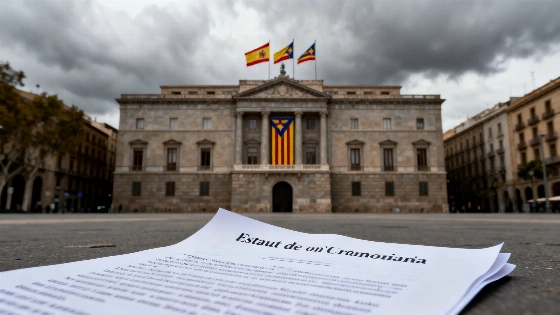
On June 18, 2006, Catalonia’s revised Statute of Autonomy, the Estatut d’Autonomia, won approval in a binding referendum after ratification by Spain’s Cortes Generales. Catalan President Pasqual Maragall led the reform’s early political development. It sought to modernize self-government and expand regional competences in response to the realities of a globalized Spain within the European Union. The reform also became part of a broader debate over how far Spain’s territorial model could evolve within the constitutional structure established in 1978.
The referendum returned 73.90% in favor, while 20.76% voted against and 5.34% cast blank ballots. Turnout was 48.85%. The result delivered a clear majority among participating voters, though fewer than half of the electorate took part. Before the vote, the statute went through parliamentary drafting and negotiation, then secured approval at both Catalan and national levels. Supporters presented the process as a democratic mandate for expanded self-government; opponents argued that some provisions exceeded the constitutional distribution of powers.
The Partido Popular challenged the statute before Spain’s Constitutional Court on July 31, 2006, contesting 114 of its 223 articles and 12 additional provisions. The case ended with Judgment STC 31/2010, issued on June 28, 2010. The court reportedly adopted the decision by six votes to four, declared 14 articles unconstitutional and imposed binding interpretations on other provisions. It did not annul the statute as a whole. The court held that the preamble’s description of Catalonia as a “nation” had “no legal value.” It also restricted aspects of the statute’s language provisions, including the preferential status envisaged for Catalan in public administration and municipal services.
The statute introduced more detailed powers and reinforced local institutions, while also setting out citizens’ rights and duties. It promoted civic participation and proposed a territorial structure based on vegueries, intended to strengthen the role of local authorities. Its provisions aimed to make government more responsive and presented Catalonia as a pluralistic society committed to Europe. The court’s interpretations narrowed some of the legal effects supporters associated with the reform. The statute remained in force, but parts of it could no longer be applied as originally intended.
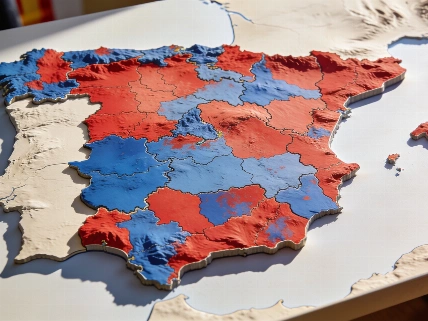
A basic aim of the reform was to give institutional expression to Catalonia’s national recognition within Spain and clarify the distribution of powers. That objective ran up against the limits of the 1978 Constitution, which recognizes autonomous communities while affirming the “indissoluble unity” of the Spanish nation. Approval by Parliament and referendum could not override constitutional review. Other regions, including Valencia, the Balearic Islands and Andalusia, adopted autonomy statutes between 2006 and 2011 without a comparable legal confrontation over a single reform.
Two decades after the referendum, the questions raised by the 2006 statute remain part of Spain’s territorial debate: how to balance regional autonomy with national unity, and how much political and fiscal recognition the system can accommodate alongside linguistic and institutional recognition. The Constitutional Court’s 2010 intervention became a major turning point in relations between Catalonia and Madrid, followed by large demonstrations in Barcelona. The statute’s ambitions and the court’s limits on parts of its structure continue to shape political negotiations and public debate across Spain, amid competing claims of democratic mandate and constitutional authority.