Celver, led by Iago Campo Vidal, has acquired Gesico 2000, a veteran satellite telecom firm. The deal boosts Celver’s presence in underserved Spanish regions and marks a rapid rise for the young company.
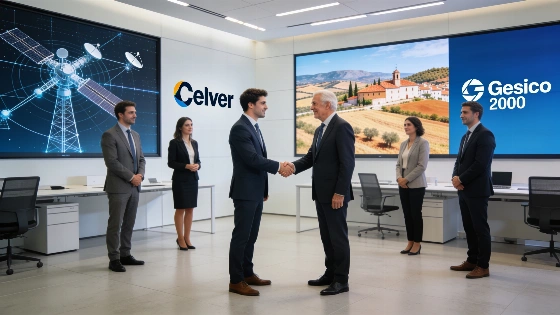
Celver, a fast-growing Spanish technology company founded by Iago Campo Vidal, has completed the acquisition of Gesico 2000, one of Spain’s longest-standing satellite telecommunications operators. The move signals a significant shift in the country’s rural connectivity landscape, as Celver takes over all of Gesico’s assets, client portfolio, and staff, consolidating its position in both residential and business markets.
Gesico 2000, established in Madrid in 1997, brings nearly three decades of experience in satellite communications. Its integration into Celver is expected to accelerate expansion plans, particularly targeting southern Europe and Latin America. The acquisition comes at a time when Celver, launched in 2023 by Iago Campo at just 22 years old, has shown remarkable growth. Company figures indicate revenue soared from under €10,000 in its first year to €950,000 in 2025, alongside a growing workforce.
The deal follows a recent corporate restructuring at Celver. Since March, the company has been jointly managed by Iago Campo and his father, renowned journalist Manuel Campo Vidal. Shortly after this change, Celver completed a €90,000 capital increase, providing the resources now used for the Gesico purchase. This strategic step transforms Celver from a promising startup into a major player in Spain’s satellite internet sector.
Celver’s business model focuses on delivering broadband internet via satellite to remote municipalities where large operators have little presence. This mission closely aligns with the long-standing advocacy of Manuel Campo Vidal, who has highlighted the challenges of depopulation and digital exclusion in rural Spain throughout his career. The company’s rapid expansion reflects a growing demand for reliable connectivity in underserved areas.
Gesico’s legacy includes providing satellite services to businesses, public administrations, and emergency services, with deployments for Civil Protection and the Army among its notable projects. Its established client base and technical expertise are expected to strengthen Celver’s service offering. Both companies have participated in the ÚNICO Demanda Rural program, led by Hispasat, which aims to extend connectivity to Spain’s least populated regions. The acquisition positions Celver as one of the country’s leading retail satellite internet operators, especially after the closure of sector leader Eurona in 2025.
Celver has also built a nationwide network of installers and serves clients such as Acciona, Canal de Isabel II, Petroprix, and Grupo Costa. The company is involved in technology projects related to sports and regional digitalization. The transformation from a small startup to a key industry player has occurred in less than three years, underscoring the pace of change in Spain’s telecom sector.
For context, the Spanish telecommunications market has seen significant shifts in recent years, with established operators facing challenges and new entrants capitalizing on technological advances. The focus on rural connectivity has become a national priority, as authorities and private firms seek to bridge the digital divide. In a related development, recent changes at La Promesa have also highlighted the impact of new arrivals and organizational shifts on established communities, as seen in this report on staff tensions and health concerns.
Spain’s push for universal internet access is part of a broader European effort to ensure that even the most remote areas are not left behind. Satellite technology is increasingly viewed as a practical solution for regions where traditional infrastructure is unfeasible. The Celver-Gesico deal exemplifies how entrepreneurial initiatives, supported by experienced industry figures, are reshaping the country’s digital landscape. As the sector evolves, the ability to deliver reliable, high-speed internet to rural communities will remain a key measure of progress.