The fallout from the Ceuta migration crisis has pushed relations between Moncloa and Zarzuela to a breaking point. Disputes over royal visits and public messaging reveal a fragile alliance at the top of Spain’s power structure.
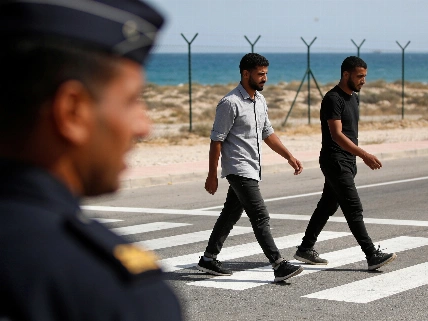
Spain’s political leadership is openly divided after a clash between the government and Casa Real over the response to the Ceuta migration crisis. Felipe VI’s absence from the autonomous city, a pointed royal statement, and uncertainty about a future visit have brought long-standing tensions into public view.
The main question is straightforward: why hasn’t the King visited Ceuta or Melilla during his reign, especially after the recent border surge? Prime Minister Pedro Sánchez raised the issue in a national radio interview, noting that Felipe VI has not set foot in either enclave in more than twenty years. The government later promised a royal visit, but without a date or plan, leaving the situation unresolved. Sánchez and other officials have said the visit will happen "when conditions allow" and will be coordinated with the Royal House, but nothing is scheduled.
This is the first explicit public step towards a royal visit to Ceuta and Melilla since Felipe VI's coronation in 2014, as the King has not visited either city during his reign.
Behind the scenes, government sources admit frustration. The latest spark came on August 1, when Casa Real released a statement expressing "great concern and indignation" over the events in Ceuta. The language echoed Sánchez’s earlier remarks about an "attack" on Spain’s territorial integrity, but one phrase—urging the state to prevent a repeat—was widely read as a criticism of the government’s response. Officials say this triggered anger in Moncloa. Casa Real’s current position, according to local media, is to express support for Ceuta and call for unity, but not to schedule a visit. Felipe VI reportedly told Ceuta’s leader, Juan Vivas, that he conveyed the "support of all Spain" and stressed unity and coexistence, but the trip remains off the calendar.
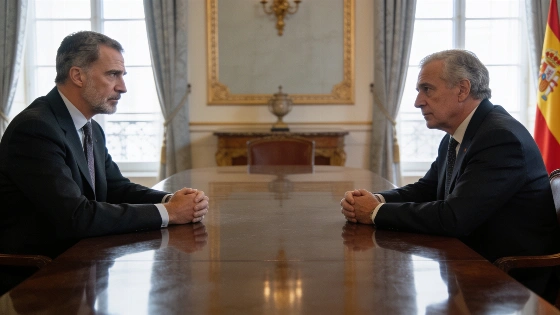
ABC reports that the statement was reviewed by Moncloa, with both Zarzuela and the Ministry of Foreign Affairs editing the final text. Sensitive language was removed, but the result still left room for different interpretations, fueling more disagreement. Spanish press say Sánchez and the King have discussed a visit, but no details have been agreed, and Sánchez has not confirmed that the King himself announced the intention to travel.
The government’s irritation continued through August. Opposition parties accused Moncloa of blocking a royal visit to Ceuta. Officials expected Casa Real to publicly deny these rumors or at least speak directly with the Partido Popular to clarify. Instead, Zarzuela stayed silent, forcing Sánchez to confirm that a visit would happen—again, without specifics. Government spokesperson Elma Saiz said there was no reproach in Sánchez’s comments, just a statement of fact: the King’s last visit to Ceuta was two decades ago, under a different government.
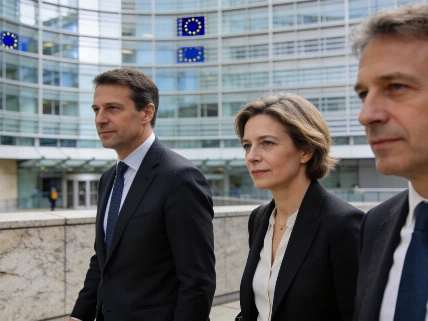
The political backdrop remains tense: the issue of Ceuta has become part of a broader debate over Madrid's response to the migration crisis. According to EURONEWS, Ceuta's authorities described the city as 'on the brink of collapse,' prompting Spain to seek assistance from Frontex and Europol.
This is not the first time the government and monarchy have disagreed. Past incidents—such as the King’s absence from the reopening of Notre Dame, disputes over Latin American inaugurations, and the handling of Juan Carlos I’s legacy—have all signaled a shift in how the government approaches the monarchy. Where Sánchez once tried to shield the institution, recent actions have highlighted points of friction.
With a royal visit to Ceuta now under discussion, Moncloa is watching for any reaction from Morocco. The government points to Rabat’s silence and lack of territorial claims after the July border incident as evidence that Morocco was not involved. Officials say Moroccan authorities cooperated after the crisis, helping to stem the flow and repatriate nationals. This view contrasts with earlier reports, such as those reported earlier, which questioned Morocco’s role. Diplomatic sources and Spanish media note that a royal visit to Ceuta could be symbolically sensitive and might provoke a response from Rabat.
The result is a government and monarchy locked in a careful, sometimes uneasy relationship. The Ceuta crisis has exposed gaps in Spain’s border management and shown the limits of cooperation at the top. As the government tries to project unity, the reality is a relationship marked by suspicion and tactical maneuvering. National crises like this one quickly become arenas for power struggles and competing narratives, leaving the public to deal with the consequences.