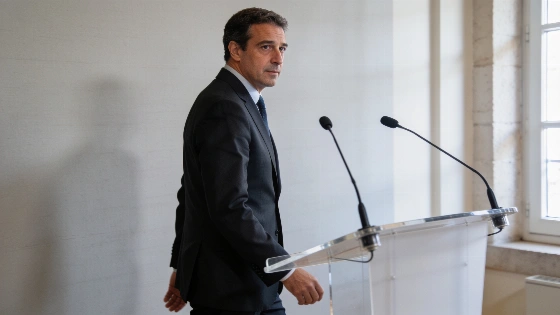
Miguel Ángel Pérez Triano has resigned as Ceuta's government delegate. He says he warned Madrid before the mass entry and faced an unfair campaign over powers he did not hold.
Reuters reported that Miguel Ángel Pérez Triano formally submitted his resignation on September 28, 2026. He is also stepping down as secretary general of the Ceuta PSOE and leaving political life. Pérez Triano says he warned Madrid about the threat of a mass migrant entry before it happened. He also says he requested measures and reinforcements before the events of July 30 and 31.
His resignation turns the dispute over responsibility into the final act of his time in office. Spanish media report that the government is preparing to approve his departure. David de la Encina is under consideration as his replacement, although Moncloa was still handling the succession.
The Spanish government was reported to be accelerating the replacement process, with David de la Encina under consideration as Ceuta’s next government delegate.
His press appearance lasted about seven minutes. No questions were taken. Pérez Triano said he had spent an immense period working in a hostile environment. He called the campaign against him unfair and said he had been criticised for matters outside his authority.
His defence was practical. The Delegation could prepare reports and send daily communications. It could not open or close border crossings or order the Army to intervene.
That is the heart of his complaint.
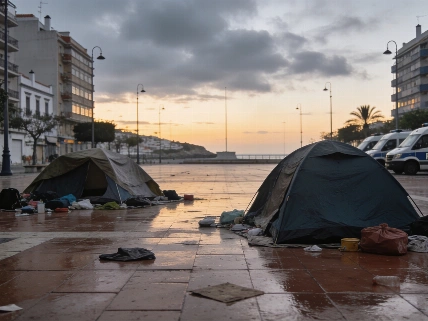
Pérez Triano said warnings were sent in the days before the entry of 80,000 undocumented migrants. Reports cited by Reuters and Spanish media place those warnings between July 24 and 29, before the largest wave on July 30 and 31. One account said Madrid was warned on July 24 about a rise in attempts to enter illegally and the prospect of stronger pressure.
According to Pérez Triano, requests for additional measures and reinforcements were made as pressure on the city grew. The mass entry was confirmed on July 30 and 31. He said the administration had done what its powers allowed. Decisions on the border and military deployment belonged elsewhere.
The dispute also includes conflicting accounts of intelligence warnings. Gonzalo Sanz, Pérez Triano’s former chief of staff, reportedly said he had passed information from Spain’s CNI about the risk of a mass entry to the Delegation, while Pérez Triano denied that account. Openly available reports do not independently confirm the details of those warnings.
In recent days, Pérez Triano had already told Ángel Víctor Torres that he did not intend to continue. He said he was stepping aside because his family did not deserve to see him under the same pressure. His work, he added, had always focused on Ceuta. His commitment to the city remained firm.
The personal cost went beyond political criticism. Pérez Triano referred to constant harassment, including insults, threats and a funeral wreath left at his door. He called those actions a form of violence.
He linked the decision to his connection with Ceuta. He was born there, studied there and works there. Independent reports described months of intense pressure and repeated attacks. Those reports suggest that the resignation was tied to personal reasons and to the political fallout from the migration crisis.
The publication's regional coverage has also included the earlier San Sebastián report. This case is different. It centers on an institutional conflict rather than a public event.
Pérez Triano thanked Ángel Víctor Torres and his cabinet, the Delegation's staff and police forces. He described his service to Spain and Ceuta as a privilege.
The factual dispute is now clear. Pérez Triano says the warnings and reports were sent even though the Delegation's powers were limited. Reuters described the episode as a border rush involving tens of thousands of migrants. Spanish reporting connected the crisis to the mass entry at the end of July.
The reported facts do not settle responsibility for the mass entry. They do show what Pérez Triano is arguing. He has answered the political and personal campaign against him by putting the limits of his office at the centre of the story.