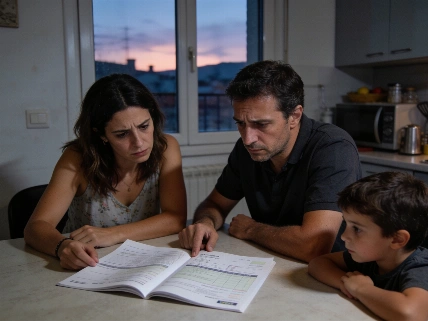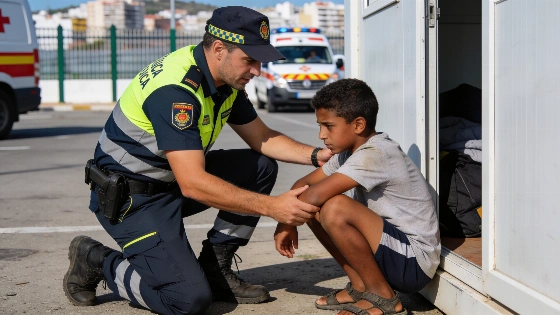
A surge of over 70,000 migrants into Ceuta in July has set off a political storm in Spain. The king calls the situation extraordinarily complex, while parties clash over what to do with unaccompanied minors and Morocco's role in their return.
Calls to send unaccompanied migrant minors back to Morocco have triggered a heated debate in Spain’s Congress, revealing sharp disagreements over how to respond to the mass arrival of more than 70,000 migrants in Ceuta at the end of July. Several independent sources put the number of crossings on July 30–31 closer to 80,000, an unprecedented influx that overwhelmed local infrastructure and authorities. What began as a logistical crisis has become a national argument over political priorities and humanitarian responsibilities.
Vox demanded an end to relocating minors within Spain, calling the influx an "invasion" and insisting that all children be returned to Morocco. Party spokesperson Blanca Armario argued that Spain has no obligation to shelter these minors, saying Morocco is able to take them back. She criticized the practice of sending children to NGOs across the country, warning it separates them from their families.
Official figures show that Ceuta's reception system for unaccompanied minors was designed for just 29 places, but during the crisis it housed around 1,100 children who could not be immediately deported.
— European Parliamentary Research Service
The Partido Popular (PP) echoed Vox’s call for Morocco to honor its agreement with Spain on returning minors, but rejected treating children as cargo. Ana Alós of the PP criticized the idea of distributing minors among Spain’s regions, warning it risks turning children into bargaining chips. She pressed the government to clarify its position toward Morocco, questioning whether Spain’s policy is driven by fear or obligation. According to Spain's Ministry of Territorial Policy, there were 2,048 registered unaccompanied minors in Ceuta, but only 10 individual cases had been formally initiated at the time. The Ministry of Youth and Children cited about 2,100 minors in the reception system.
Socialist deputy María Carmen Castilla rejected the proposals from Vox and the PP, accusing both parties of using children to fuel fear and compete for the toughest stance. She called their alliance an "axis of cynicism" and argued that neither repatriation nor relocation alone solves the problem. Sumar’s Nahuel González went further, calling the proposals racist and ineffective, and condemned Vox’s rhetoric—including calls to "hunt" migrants—as inflammatory. The debate has been complicated by reports in Spanish media, such as elDiario.es, alleging that some minors were returned to Morocco without the required individual legal procedures or oversight by the prosecutor's office.
Other parties also criticized the government’s handling of the crisis. The PNV’s Nerea Renteria questioned the logic of demanding repatriation while refusing to allow minors to be transferred to the mainland, calling Vox’s approach contradictory. Cristina Valido of Coalición Canaria dismissed the agreement with Morocco as empty and said rejecting relocation shows disregard for Spain’s southern border regions. UPN’s Alberto Catalán described the situation as a business for the Moroccan government, suggesting the fate of the minors is secondary to political interests.
Since August 10, more than 5,300 migrants have voluntarily returned to Morocco, according to Spanish authorities, while the European Union has allocated €114.7 million to Spain to strengthen reception facilities and support returns, including assistance for minors.
— Christian Science Monitor
Amid the political standoff, King Felipe VI described the Ceuta crisis as "extraordinarily complex" and praised the "civic example" set by Ceuta’s residents. Speaking at the Escuela Nacional de Protección Civil, he highlighted the work of emergency services and said Ceuta remains a national priority. His comments underscored the seriousness of the situation and the strain on local resources. According to the European Parliamentary Research Service, Ceuta remains tense, with thousands of migrants still present as of mid-September. Many minors are either on the streets or in overcrowded facilities, and their transfer to the mainland or return to Morocco remains unresolved.
Vox also called for a law to militarize Spain’s borders, a move supported by the PP but rejected by the PSOE and its allies. The BNG’s Néstor Rego condemned the proposal, arguing it would turn a humanitarian crisis into a political weapon and further militarize society. The debate over border militarization has become a flashpoint, reflecting wider anxieties about migration, security, and Spain’s relationship with Morocco. On September 10, Morocco’s Ministry of Foreign Affairs publicly denied any involvement in the mass crossing, saying there was no evidence that Moroccan authorities participated.
Ceuta’s crisis is not just a local emergency but a sign of Spain’s unresolved tensions over migration, border management, and international agreements. The king’s intervention shows the issue has reached the highest levels of government, but the lack of consensus in Congress reveals a political landscape where humanitarian concerns often take a back seat to political maneuvering. As parties trade accusations and propose conflicting solutions, the fate of thousands of minors remains uncertain, caught between diplomatic deadlock and domestic rivalry. The episode highlights the fragility of Spain’s migration policy and how quickly vulnerable children can become bargaining chips in a larger political fight.