A judicial investigation into the Ceuta border tragedy has ignited fierce political and legal battles in Spain. Leaked police documents and accusations of Moroccan involvement have put the government under intense scrutiny. The fallout could reshape how Spain handles migration and state responsibility.
Demands for criminal charges against Spain’s top officials erupted after a confidential police report surfaced, hinting at possible Moroccan government involvement in the mass entry at Ceuta. The leak, which appeared just before the prime minister’s scheduled appearance in parliament, has put Spain’s migration policy and legal system under sharp scrutiny.
The controversy centers on a preliminary investigation by the Audiencia Nacional, Spain’s top criminal court, into possible crimes linked to the late July border incident. Authorities are looking into whether large-scale facilitation of irregular migration, human trafficking, or even homicide occurred, as more than a hundred people died trying to cross into Spanish territory. According to official statements cited by Reuters, Prime Minister Pedro Sánchez has publicly denied claims that the Moroccan government orchestrated the events, saying Spanish intelligence services have found no evidence implicating Moroccan authorities in what happened at Ceuta.
Spain's interior minister and national police chief have both stated that there is no official police report attributing the planning or execution of the Ceuta border crisis to Moroccan security forces.
The legal situation is complicated by the cross-border nature of the alleged crimes. Spanish law, specifically article 318 bis of the Penal Code, allows prosecution of acts that take place partly outside Spain. The Audiencia Nacional is involved because the case may involve organized criminal groups operating from abroad.
The investigation has been far from routine. The police report, which reportedly points to Moroccan authorities, was leaked at a politically sensitive time and kept secret from senior police officials. The interior minister said he was surprised by the document’s existence, exposing a breakdown in communication within law enforcement and raising questions about how intelligence is handled in high-profile cases. The Spanish government’s official position currently differs from some media reports about a "Moroccan connection": while some outlets reference a 55-page CENIF police document alleging "preliminary planning" and "active guidance" by Moroccan services, top officials say no such attribution has been formally established.
Judicial secrecy is standard in ongoing investigations, but the lack of coordination between intelligence analysts and their superiors is not. The situation has fueled speculation and mistrust between branches of government, with some political figures now demanding that the prime minister be held criminally responsible for the events in Ceuta.
The scale of the Ceuta incident remains a matter of debate: some reports estimate up to 70,000–80,000 crossings, though these figures are contested and depend on how participants are counted. The judicial investigation, led by Audiencia Nacional, is still in its early stages and focuses on possible crimes related to mass illegal migration and other serious offenses.
Spain’s Constitution sets a high bar for prosecuting a sitting head of government. Article 102.2 outlines a special process for crimes of treason or offenses against state security committed in office—categories that do not fit the Ceuta case, which has no link to wartime betrayal or rebellion. For other alleged crimes, ministers are subject to the Supreme Court, which is unusual in European legal systems.
Despite the political drama, it is rare to prove direct criminal liability for top officials in complex, cross-border incidents like this. Usually, only those directly piloting migrant vessels are prosecuted, not the networks or state actors behind them. As reported earlier, opposition leaders have used the crisis to intensify their campaign against the government, but the legal path is narrow and full of obstacles.
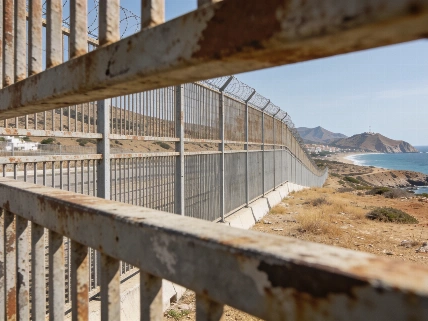
Spain’s approach to border management is shaped by its geography and its relationship with Morocco. Ceuta, a Spanish enclave in North Africa, is a frequent flashpoint for migration and diplomatic tension. The deaths at the border have reignited debate over humanitarian obligations, national security, and the limits of judicial intervention in politically charged crises. The current investigation highlights not only fragile trust between agencies but also the risks of politicizing criminal justice. If critics hope to turn this tragedy into a legal reckoning at the highest level, they face a difficult path—one that may reveal more about Spain’s institutional weaknesses than about any individual’s guilt.