Juan Jesús Vivas, president of Ceuta, now says a small group of unaccompanied migrant minors who cannot be sent back to Morocco may be moved to the Spanish mainland. This breaks with the Partido Popular’s hard line and shows clear splits inside the party.
Juan Jesús Vivas, president of Ceuta, has stepped away from the Partido Popular’s tough talk on migrant minors. For months, he insisted every unaccompanied child who crossed into Ceuta had to go back to Morocco. Now he admits some cases—where return is blocked by legal or administrative hurdles—could mean transfer to the Spanish mainland.
This comes as the national Partido Popular, led by Alberto Núñez Feijóo, digs in against any such transfers. Party leaders in Madrid warn that moving minors to other regions would create an “effecto llamada,” or pull factor, for more arrivals. But Vivas, dealing with the situation on the ground, has said what many officials already know: not every minor can be sent back, no matter what the party says. According to Euronews, Spanish authorities stress that returns to Morocco are never automatic. Each case needs a review of family circumstances and must follow the "best interests of the child" rule.
In the past year, approximately 700 minors have been transferred from Ceuta to other regions of Spain following the reform of Article 35 of the immigration law.
At a Forbes event in Madrid, reporters pressed Vivas for answers. He was clear: “Nobody doubts that family reunification is the first option.” But when asked about the “minimal” cases that cannot be returned to Morocco, he said, “Those minimal cases will be attended to in accordance with Spanish legislation.”
That law—Article 35 of the immigration law—requires Spain’s autonomous communities to take in minors when a region’s capacity is overrun by three times or more. Ceuta’s normal capacity is 29 places. Right now, 2,383 minors are registered in the city. The numbers show the system is overwhelmed. There is little room for political games. Independent outlets like Maldita confirm Ceuta’s infrastructure is stretched far past its limits, with minors outnumbering available places by a wide margin.
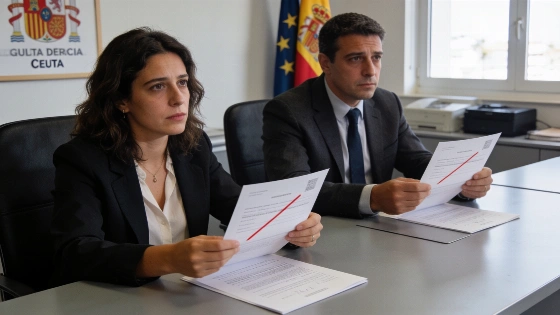
Vivas said about 40 cases are already being processed. “Let’s exhaust the return route. If that cannot be carried out, we will open another,” he said. The Ministry of Youth and Children has put forward two options: voluntary deals between regions or mandatory use of Article 35. Recently, five girls were sent to Navarra, which is run by the PSOE, under such a deal. Ceuta had to give explicit approval for the transfer.
Several sources indicate that new case files are being prepared for dozens of minors, and the total number of family reunification requests may exceed 300. This suggests that the issue will likely be resolved in waves rather than through a single decision.
“Yes, the law continues to be applied. We are not against the law being enforced. But what has happened means we need to rethink the situation, because the ordinary resources are not fit for a scenario like this,” Vivas said. Besides these transfers, 54 minors have already been moved to the mainland to join family members in Spain, according to several independent media reports.
Ceuta’s approach is practical, and it stands out against the national Partido Popular’s messaging. Party leaders keep warning of “invasions” and the risk of a pull factor. But even regions run by the PP are now hosting minors who arrived before the latest surge. The contradiction is obvious: if Navarra can take minors, why not other regions, including those under PP control?
Vivas distances himself from the “effecto llamada” argument. “Not exactly that. We consider it an invasion, and conclusions must be drawn,” he said in Madrid. He called on the central government for “structural and consistent responses over time.” He also asked the European Union to fund a “tutor” for minors sent back to Morocco who cannot be reunited with family, suggesting EU money could help Moroccan institutions care for these children.
Morocco says it will accept “all” minors. But before the current crisis, Rabat refused to take back 668 children whose cases had already been processed and approved for return. Of the 2,383 minors now in Ceuta, about 700 arrived before July 30. The logistical and diplomatic problems are still huge.
Meanwhile, the central government’s plan, as explained by Minister Ángel Víctor Torres, is to make sure all minors are found and housed in Ceuta before any return or transfer. “To be returned or relocated, minors must first be in spaces where their cases can be processed. You cannot do this if you do not know where they will sleep,” Torres said. He noted that the number of cases being processed is rising by 40 to 50 percent each week. According to El Constitucional, the Ministry of Youth and Children is pushing for mandatory or agreed redistribution of minors among Spain’s regions to ease the pressure on Ceuta.
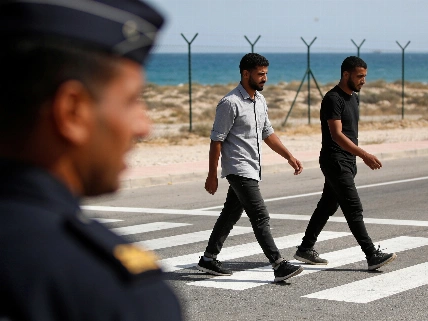
Adults who remain on Ceuta’s beaches after the mass crossing in late July, Torres said, will be returned. The government is trying to process as many cases as possible, but the scale of arrivals has shown the limits of current infrastructure and policy.
The Partido Popular’s internal splits are now out in the open. Ceuta’s case shows the gap between political slogans and what actually happens. The law, not party lines, is setting the next steps. For a party built on hard borders and zero tolerance, Vivas’s move is more than a local shift. It is a public admission that migration cannot be solved with slogans alone. Ceuta is now a test of whether Spanish politics can move past rhetoric and deal with migration using real, legal solutions. For more on how political networks and legal processes work in Spain, see this previous investigation.