A handwritten note uncovered by the Guardia Civil points to Sofía Puente, sister of Transport Minister Óscar Puente, taking a personal interest in the Spanish citizenship process for exiled Venezuelan official Nervis Villalobos. The case now pulls in the Leire Díez network and raises questions about public money.
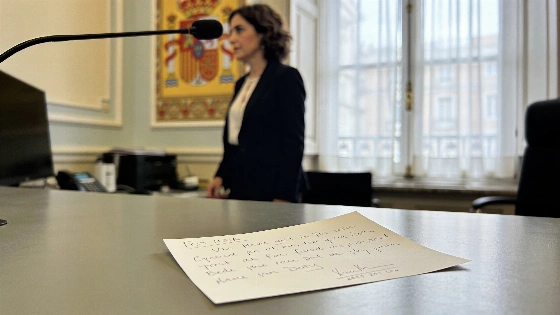
A single handwritten note has put Sofía Puente, former director general of Legal Security and sister of Transport Minister Óscar Puente, right in the middle of a growing probe into how Nervis Villalobos, a Venezuelan exile, got Spanish citizenship. Villalobos has close ties to the Leire Díez network. The Guardia Civil’s Central Operational Unit (UCO) found the note. It reads: “Expediente nacionalidad pregunta la Directora: Nervis Villalobos.”
Investigators found this short message during a search at the Ministry of the Presidency, Justice and Relations with the Courts. It has become a key piece of evidence. The UCO sent a report to Judge Santiago Pedraz. The official who handled Villalobos’s citizenship file could not say where the note came from or what it meant. Still, Villalobos, a former Venezuelan deputy energy minister, ended up with Spanish citizenship. That move may have protected him from being sent to the United States, where he faces charges of laundering money stolen from Venezuela’s state funds during the Chávez years.
Nervis Villalobos obtained Spanish citizenship in April 2025 under the Ley de Memoria Democrática, after being twice denied residency-based naturalization.
For Villalobos, Spanish citizenship was more than just a passport. It could block US attempts to extradite him. The UCO’s findings show his case was not just another file. It caught the eye of top officials. Investigators now think Villalobos may have also paid for pressure campaigns against prosecutor José Grinda. Grinda is a key player in cases tied to the Leire Díez network. Díez herself is under investigation for allegedly trying to disrupt court cases at the request of Santos Cerdán, who was once deputy leader of Pedro Sánchez’s PSOE.
The money trail makes things even murkier. EL MUNDO reviewed documents showing the PSOE paid almost €20,000 to Crónica Libre, a media outlet linked to Leire Díez. The European Public Prosecutor’s Office is now looking into whether EU funds were misused to back Díez’s activities. This comes after a private citizen tipped them off. If they find proof of EU fund misuse, a formal probe will start.
Testimonies collected by the UCO add more detail. Nuria Coronado, who used to write for Crónica Libre, told investigators she was told the outlet got €15,000 from the PSOE. This led to the removal of a critical article about the party’s Trans Law. Patricia López, the late founder of Crónica Libre, reportedly said the editorial change was because of the payment for a campaign supporting Teresa Ribera’s run in the European elections. Mónica Hurtado de Mendoza, who leads IKI Media Solutions, confirmed Crónica Libre was first set to get €20,000 for the campaign, with a possible extra €5,000 later. In the end, the contract was for €14,980 net, or €18,125.80 with VAT.
According to Demócrata, the investigation into Leire Díez remains open as of late August 2026, with ongoing witness interviews and an expanding circle of figures under scrutiny. The case also examines alleged attempts to obtain information about prosecutor José Grinda and explores possible financial links between Díez’s network and Nervis Villalobos.
These findings echo what has happened in other Spanish corruption cases, where money and political power mix. As reported earlier, the Guardia Civil has tracked similar networks moving millions across borders, often using shell companies and shadowy media outlets.
The UCO’s report, now with the Audiencia Nacional, has revealed more than just a minister’s family member possibly involved in a sensitive citizenship case. It shows how political strategy, media funding, and interference with the courts can blur together. The fact that a single note—“Pregunta la Directora”—could set off such a wide investigation shows how fragile institutional checks can be when personal ties and political interests mix. For Spain, this case is a clear warning that transparency in public service cannot be taken for granted. Even a small paper trail can unravel a much bigger web of influence.