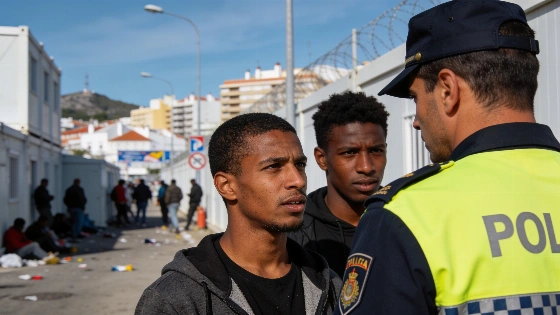
Ceuta’s vice president accuses the central government of failing to restore order after thousands of migrants arrived. Local officials demand clear action and accountability as the city remains under pressure.
Three weeks after the sudden arrival of around 80,000 migrants in Ceuta, the city continues to struggle with the aftermath. The vice president of the Ceuta Assembly, Melchor León, has openly criticized the central government, led by his own party, for what he describes as a lack of decisive action and support. According to León, the city’s residents feel abandoned as the crisis drags on without a clear resolution or timeline for returning to normality.
León, a member of the PSOE, has called for the government to publish a concrete plan to address the situation and to take responsibility if commitments are not met. He argues that the government has failed to provide accurate information about the number of migrants who entered or left the city, and claims that the response so far has only shifted problems from one neighborhood to another without real solutions. León also points to the lack of coordination and transparency, noting that even after visits from several ministers, local authorities and citizens remain in the dark about the next steps.
The vice president’s criticism extends to the handling of minors among the migrants, emphasizing that Spanish law requires individual case reviews, which could take months or even years given the current strain on the judicial system. He insists that if the government’s claims of strong cooperation with Morocco are true, efforts should be made to reunite minors with their families as soon as possible. León has also demanded the dismissal of the government delegate in Ceuta, arguing that local interests have not been prioritized during the crisis.
Economic concerns are mounting as well. Business leaders and the Chamber of Commerce have urged the government to implement emergency measures to prevent layoffs and business closures. León warns that without targeted support, the economic impact on Ceuta could be long-lasting. He stresses that the situation is not just a migration issue but a humanitarian crisis that has pushed the city’s resources to the limit.
Despite sending a letter to the prime minister outlining these concerns, León says he has received no response from the government or his party. He reports having faced internal pressure to moderate his criticism but maintains that transparency and accountability are essential, regardless of political affiliation. According to León, if the central government were from another party, public protests would already be underway.
Ceuta’s ongoing crisis highlights the challenges faced by Spanish border regions during sudden migration surges. The city’s unique position, bordering Morocco, has made it a focal point for migration into Europe. Spanish law requires individual processing for each migrant, especially minors, which can overwhelm local institutions. The lack of a clear government strategy has fueled frustration among residents and officials. As the situation remains unresolved, calls for a public timeline and concrete measures continue to grow, reflecting broader debates in Spain about migration policy, border security, and the responsibilities of national and local authorities.