The second day of Sónar saw Charlotte de Witte dominate the stage. Skepta impressed with his set, while Kelis failed to connect with the audience. Attendance patterns and artist choices shaped the festival’s atmosphere.
The second day of Sónar in Barcelona was marked by a dramatic shift in energy as Charlotte de Witte’s performance drew unprecedented crowds, while other headline acts delivered mixed results. The festival’s new integrated format saw attendees largely absent from the early sessions, leaving venues quiet until late afternoon. This late arrival pattern left early acts performing to sparse audiences, with the main surge coming as night fell.
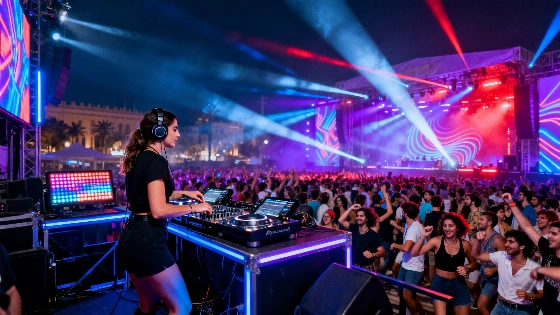
Charlotte de Witte emerged as the clear focal point of the evening. Her set at the Club stage attracted a massive audience, filling the venue to capacity and creating a sense of scale rarely seen at the festival. De Witte’s relentless techno, combined with her technical skill and stage presence, resonated strongly with festival-goers. The Belgian DJ’s approach—marked by intense lighting, a signature black outfit, and a carefully managed crescendo—delivered the high-energy experience many expected. However, some noted a lack of musical variation, with her success relying more on intensity than on subtlety or innovation.
In contrast, Kelis’s appearance failed to generate the same enthusiasm. Her set, built around a minimal arrangement with a DJ, drummer, and backing vocalist, leaned on her well-known rhythm & blues hits. Despite performing classics like Millonaire, Trick Me, and Bossy, the audience remained largely disengaged, with only her dance tracks Bounce and Acapella sparking brief moments of excitement. The overall impression was of a performance that did little to enhance the festival’s reputation, with Kelis acting more as a host than a headliner seeking to reclaim past glory.
Skepta’s show provided a notable highlight, especially for the English contingent in the crowd. Wearing a distinctive hood, the rapper delivered a set that balanced rapid-fire grime rhythms with varied cadences and introspective moments. Tracks like Gas Me Up and Bullet From a Gun showcased his range, while collaborations and energetic numbers such as Praise The Lord and It Ain’t Safe encouraged active participation. Skepta’s hour-long performance stood out for its intensity and diversity, contrasting with the more linear approach of other acts.
Elsewhere, SBTRKT challenged the audience with a complex, layered live set that proved difficult for many to dance to, while Nia Archives brought a smoother, jungle-infused sound to the Lab stage. Her performance, featuring tracks from her upcoming album Emotional Junglist and earlier releases, created a vibrant atmosphere reminiscent of UK club scenes. The presence of diverse and expressive festival-goers, along with the attention of media crews capturing standout moments, added to the event’s dynamic character.
Sónar’s evolving format and artist lineup continue to shape the festival’s identity. The event, established in 1994, is recognized as one of Europe’s leading electronic music festivals, drawing international audiences and artists. Its ability to attract both established names and emerging talent remains central to its appeal, even as audience expectations and attendance patterns shift. The prominence of acts like Charlotte de Witte and Skepta highlights ongoing changes in the electronic music landscape, while the mixed reception for legacy artists such as Kelis underscores the challenges of maintaining relevance in a rapidly evolving scene.