BYD’s electric cars are forcing Spanish buyers to rethink old prejudices about Chinese vehicles. With strong sales, long warranties, and local after-sales support, the brand is testing whether reputation or reality will shape the future of Spain’s car market.
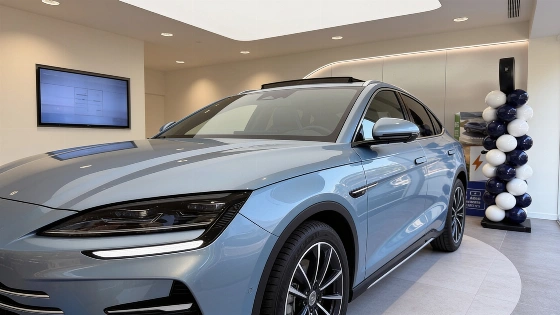
Walk into a BYD Gamboa dealership in Madrid. Sit in a BYD Seal. The questions come fast. That badge—BYD—still makes many Spanish buyers pause. Will this car last? Can it compete with European brands? If BYD disappears, who will fix it?
These doubts are real. BYD only started selling cars in Spain in 2023. For many, it still feels new. But the numbers tell another story. Industry publications report that by August 2026, BYD was close to 30,000 registrations for the year. Chinese brands together made up about 14.5% of new passenger car sales. That’s a big jump. BYD now leads Spain’s electric vehicle market, according to official statistics cited by sector media.
In August 2026, BYD led Spain's plug-in vehicle market with 3,190 registrations and a 16.7% share, according to official and industry sources.
Quality and guarantees
The old line—"Chinese cars are cheap, so they must be low quality"—doesn’t hold up anymore. The BYD Seal is a 4.8-meter electric sedan. It goes head-to-head with European, Korean, and American models. BYD does things differently. It makes its own batteries, motors, control systems, and even semiconductors. The Seal’s Blade Battery got five stars in Euro NCAP safety tests. That matches the best in the world. For buyers, the warranty is clear: six years or 150,000 kilometers for the car, eight years or 250,000 kilometers for the battery, and at least 70% battery health. Independent reviews point out that these warranties and BYD’s high-tech image have chipped away at the old "cheap means poor quality" argument.
But one question sticks. Will BYD stay in Spain? No carmaker can promise decades ahead. Still, BYD’s size and growth here make it look like more than a passing trend. The company started with batteries and now builds cars, electronics, and energy storage. That’s a solid base. Sector analysts say BYD’s public stance in Spain is more confident now. The local CEO has said not every Chinese brand will survive in Spain. The market is getting tougher. Competition is heating up.
Range anxiety and real-world use
For many buyers, the badge matters less than the battery. Take the BYD Atto 3 EVO. It claims 510 km of range on the combined cycle, and up to 710 km in city driving. The 74.8 kWh battery and 800-volt system mean fast charging—10% to 80% in about 25 minutes at up to 220 kW. But that 710 km only happens in city traffic. On highways, 510 km is the official number. Real range depends on speed, weather, and hills.
Some people don’t want to plan charging stops or install a charger at home. For them, BYD sells plug-in hybrids like the Atto 2 DM-i. It can go 90 km on electricity alone, or up to 100 km using both electric and petrol power. For daily trips, it works as a pure electric. For longer drives, the engine takes over. The real question is simple. How far do you drive each day? Where can you recharge?
The growth of Chinese car brands in Spain is not limited to battery electric vehicles; plug-in hybrids are expanding even faster, partly bypassing EU tariff measures that mainly target fully electric imports.
Equipment and local support
Another myth falls apart on closer look. "Affordable means poorly equipped" doesn’t fit BYD’s entry models. The Atto 2 DM-i Active comes with driver aids, connectivity, and comfort features that cost extra elsewhere. BYD’s control over its own tech keeps costs down. But that doesn’t mean it’s the best choice for everyone. Buyers still have to compare price, running costs, space, performance, and features. Where the car is made matters less now.
After the sale, support matters most. BYD Gamboa runs official sales and service centers in Atocha and Rivas-Vaciamadrid. Grupo Gamboa, a Madrid family business with over sixty years in cars, stands behind them. The group has 900 staff, 40 service points, and more than 30 after-sales centers in Madrid. Over a hundred technicians are trained for electric vehicles. In 2025, 77% of its new car sales were electrified. The car may be Chinese. The people fixing it are from Madrid.
Changing the conversation
Back at the showroom, the customer returns to the BYD Seal. The questions change. Now it’s about space, features, range, price, warranty, and after-sales help. The process starts to look like buying any other car. Compare. Test drive. Trust the local dealer.
Old ideas about Chinese cars won’t vanish overnight. Nor should they disappear just because one brand says so. The only way to judge is to check the data, see the car, drive it, and know who will help after the sale. In Madrid, BYD brings the tech. Grupo Gamboa brings local trust. Sometimes, the answer is simple. Open the door. Sit behind the wheel.
For anyone watching Europe’s car market, BYD’s rise in Spain is a sign. Old reputations are under pressure. The shift feels like when the MINI and Fiat 500 changed what people expected from small cars, as shown in this earlier breakdown. Now, the real test for Chinese brands is not just matching rivals on paper. It’s whether Spanish buyers will judge them by what counts: the drive and the support that follows. So far, the evidence says the market is ready to move past the myths. Facts matter more now.