
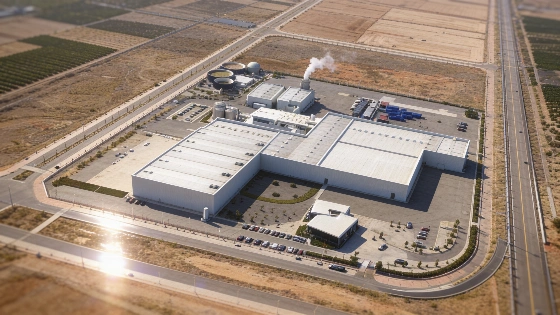
Chinese companies now control or partner in six major Spanish automotive plants. The latest change puts VW’s Sagunto battery factory under Gotion’s management after a Korean partner pulled out.
Volkswagen’s battery plant in Sagunto has changed direction. After the Korean partner left, Gotion—a Chinese company with ties to VW—stepped in to complete the project. Production, once expected this year, is now pushed back to at least 2027. This isn’t a one-off. It’s part of a series of moves that have put Chinese firms at the center of Spain’s car industry.
Chinese brands already account for 20% of Spain’s car market and are aiming for 30%. Their industrial presence is growing even faster. Spain, as Europe’s second-largest car producer after Germany, has become a key target for Chinese investment. Industry sources like Motor16 and La Vanguardia point to Spain’s underused manufacturing capacity as a major draw for Chinese groups.
The Zaragoza gigafactory project with CATL involves an investment of up to 4.1 billion euros, making it one of the largest Chinese-Spanish industrial partnerships to date.
Several Spanish plants have shifted to Chinese ownership or joint ventures. Ebro, a Spanish brand, was first to partner with China’s Saic, which owns Omoda, Jaecoo, and Lepas. Ebro now sells Chinese-designed cars under its own name, with Saic running production at the old Nissan plant in Zona Franca. For now, this means assembling vehicles, but the approach is spreading.
Linares, once home to Santana, is following a similar route. Chinese groups Zhengzhou and Baic have joined as partners, though actual car production hasn’t started yet. Currently, finished Chinese vehicles arrive by ship, and Linares’s role is mostly symbolic. Sector analysts in Motor16 note that this reflects a broader pattern: Chinese companies provide platforms and technology, while Spanish sites handle assembly and local adaptation.
Stellantis has made two major deals with Chinese partners. The company bought a stake in Leapmotor, which will oversee car production at Stellantis’s Villaverde plant. Meanwhile, the battery megafactory in Zaragoza is a joint venture with CATL, China’s top battery maker.
Chinese manufacturers are not only entering Spain through imports, but are also localizing battery production, assembly, and joint ventures, securing positions in the most strategic segments of the value chain.
Motor16
Ford’s Almussafes plant is also moving into the Chinese sphere. Geely will lease the site to produce several models, some under its own brand and others for Ford. The deal could bring up to five new car models. According to OICA and La Vanguardia, this is seen as a way to keep jobs and use excess capacity at the plant.
MG, owned by Saic, is building an assembly plant in Ferrol to supply vehicles across Europe. Construction at the port has already started to make room for the new facility.
China’s rapid expansion in Spain isn’t just about factories. Spain offers cheap renewable energy, low labor costs, and a government open to working with Beijing. These factors have made Spain a natural entry point for Chinese automotive ambitions in Europe.
The impact of Chinese brands on Spain’s car market has been clear for some time, as shown by the arrival of the Geely E2, which challenged established European brands with aggressive pricing.
As Chinese companies expand their hold on Spanish automotive production, the industry is changing. The old model of European dominance is giving way to a new phase shaped by Chinese capital, technology, and strategy. For Spain, this is more than just new jobs or investment—it marks a shift in who controls the future of its main industrial sector. China is no longer just a competitor in Spain’s car market. It now plays a central role in shaping its industrial future.