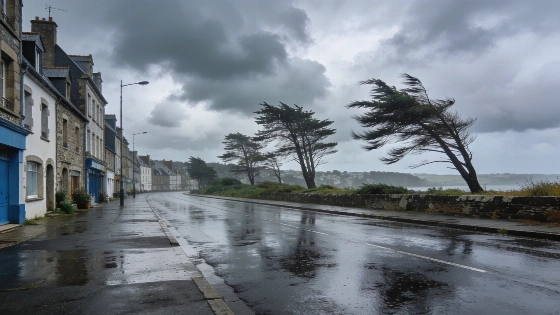
Fougères is expected to shift from a damp, overcast morning to a clear, cooler night on Thursday, August 6, 2026. Residents will wake to a fully clouded sky, high humidity and temperatures around 14°C. The air will gradually warm to close to 20°C by midday. Winds will initially be calm, then pick up and shift from west-northwest to west-southwest before strengthening to 10 km/h as they turn north and then north-northwest. The change in direction will coincide with the first signs of clearing.
By early afternoon, conditions should improve more noticeably. Temperatures will hold between 21°C and 22°C before reaching a high of 23°C later in the day. Clouds will thin, giving way to mostly clear skies from mid-afternoon onward. North-northwest winds will strengthen to 15 km/h, with gusts of 30 to 40 km/h, before settling around 35 km/h. Humidity will gradually decrease through the afternoon.
The clearest skies are expected in the evening, with no impressive cloud cover between 18:00 and 23:00. Temperatures will fall from 22°C at the start of the evening to 17°C late at night. Winds will remain north-northwesterly at 15 km/h, briefly increase to 20 km/h from the northwest, then return to the north-northwest, with gusts of 30 to 35 km/h. Humidity will rise steadily.
Overnight, temperatures will drop from 16°C at the start of the night to 12°C by dawn. Winds will stay light at around 10 km/h before easing to 5 km/h, while gusts decline from 25 km/h to 10 km/h. Skies will remain clear, and humidity will increase toward morning. Winds will stay northerly throughout the night.
Friday will begin calmly, with temperatures near 11°C under clear skies and persistent humidity. By late morning, temperatures will climb to around 20°C. Light winds will shift from the north to east-northeast, with gusts up to 20 km/h. In the afternoon, temperatures are expected to reach 27°C as north-northeast winds strengthen to 10 km/h and thin clouds pass occasionally.
Rapid changes in temperature and wind are not uncommon in Western Europe during summer. Similar fluctuations have recently affected other regions. Western Switzerland, for instance, experienced record heat and severe storms. That kind of variability can disrupt daily routines. In Fougères, shifting skies and temperatures may affect outdoor plans and local agriculture, while also influencing energy use as the region moves from summer heat to more moderate weather.