Western Switzerland faces extreme heat, with temperatures reaching 37°C in several cities. Violent storms and heavy rainfall add to the disruption. Relief is expected midweek as conditions gradually improve.
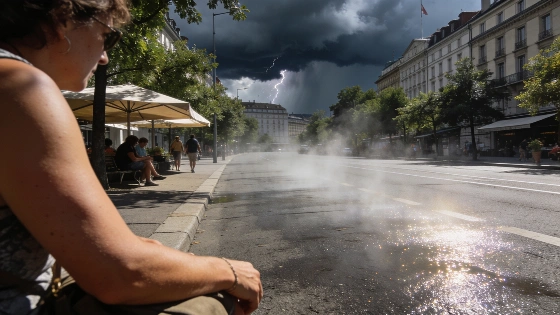
Western Switzerland is enduring a day of exceptional heat and severe weather, with temperatures soaring to 37°C in Geneva, Yverdon-les-Bains, and Delémont, according to MétéoSuisse forecasts. Sion in Valais is also experiencing intense heat, with the mercury climbing to 34°C. The extreme conditions are compounded by violent thunderstorms, particularly around Lake Geneva, where heavy rainfall is expected to cause further complications.
Monday's weather marks the peak of the current heatwave, pushing infrastructure and residents to their limits. The combination of high temperatures and sudden storms has led to warnings for potential flooding and disruptions, especially in urban areas and regions near major water bodies. Authorities are urging caution, as the risk of flash floods and localized damage remains high throughout the day.
On Tuesday, the weather is set to remain unsettled. Cloud cover will persist, with residual showers likely in the morning. Fribourg and Lausanne are forecast to see temperatures around 31°C, while the threat of further violent storms cannot be ruled out. The unstable conditions are expected to gradually subside as the week progresses.
By Wednesday, a noticeable shift is anticipated. Sunshine will return to most of western Switzerland, bringing drier air and more manageable temperatures. Neuchâtel is expected to reach 31°C, while Sierre will see a slightly cooler 29°C. However, isolated thunderstorms may still develop in the Alpine regions, keeping authorities on alert for sudden weather changes.
Thursday should confirm the trend toward calmer weather, with widespread sunshine and dry conditions across the region. Temperatures will continue to ease, with Geneva forecast at 31°C and Bulle at 27°C. Despite the improvement, the possibility of isolated storms remains, particularly in mountainous areas.
This episode of extreme weather in Switzerland follows a broader pattern of abrupt meteorological shifts seen across Europe in recent years. For example, the Basque region recently experienced a rapid transition from heat to rain, as detailed in a recent report on sudden weather changes in Bizkaia. Such fluctuations highlight the growing unpredictability of summer weather, with authorities and residents alike adapting to more frequent and intense climate events.
Switzerland's infrastructure is generally well-prepared for heatwaves, but the combination of high temperatures and violent storms presents unique challenges. Public health officials recommend staying hydrated, avoiding outdoor activity during peak heat, and monitoring local alerts for storm warnings. The current situation underscores the importance of robust emergency planning and public awareness as climate patterns continue to evolve across the continent.