ERC’s arrangement with Podemos guarantees no winnable list positions. The dispute over a broader left-wing alliance unfolds as Spain’s monarchs begin a historic visit to Ceuta.
With Spain’s general election set for 29 November, Ada Colau urged ERC and Podemos to join the Frente Amplio, warning that the left must unite to stop the far right. She said there was still time to negotiate and pressed the parties to move from their current positions. Voters will elect members of the Congress of Deputies and the Senate.
Colau thanked Izquierda Unida and Más Madrid for backing her as the alliance’s candidate for prime minister. The Comuns and Movimiento Sumar also backed her. The four parties selected the former Barcelona mayor on 12 October. She is expected to stand in Barcelona, rather than Madrid, where candidates for prime minister usually lead their party lists.
Podemos has ruled out joining the Frente Amplio. Secretary general Ione Belarra said her party remains open to other groups joining its arrangement with ERC. The split leaves Colau’s push for a wider alliance unresolved.
ERC spokesperson Isaac Albert said Podemos would have space on lists in Barcelona and Tarragona. He also said the party would take part in campaign events in Madrid and Barcelona. The two parties announced their cooperation on 12 October, 48 days before the election, after talks about Podemos joining the Frente Amplio. Sumar and Izquierda Unida are part of that alliance. So are Más Madrid and the Comuns.
The agreement does not create a single coalition or a joint nationwide list. It provides for Podemos to support ERC lists in Catalonia. ERC leader in Congress Gabriel Rufián and Podemos representative Irene Montero will campaign together. The deal guarantees no winnable places. Any candidates elected under it would join ERC’s parliamentary group, and ERC has confirmed Rufián as its lead candidate. The arrangement comes alongside other election manoeuvres, including the ERC-EH Bildu Senate pact.
Gerardo Pisarello said the Comuns would keep looking for a route for Podemos into the Frente Amplio. Sumar spokesperson Verónica Martínez Barbero said they still hoped Podemos would join. On 12 October, the Frente Amplio publicly invited Podemos to take part in its election project, saying every organisation had a role to play. Irene Montero confirmed that talks were continuing. As of 13 October, Podemos remained outside the four-party alliance, and no final decision on joining had been announced.
The PP and Unión del Pueblo Navarro have also reached a preliminary agreement to run together on 29 November. UPN’s governing bodies must still ratify it. In 2023, the parties stood separately and each won one seat in Navarra.
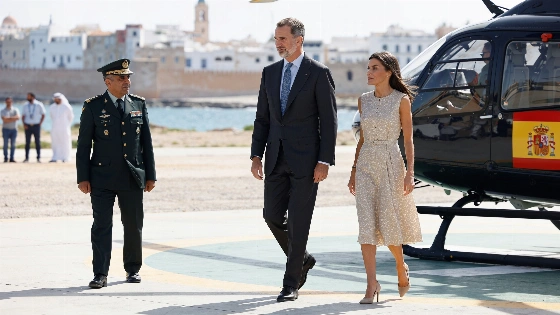
Felipe VI and Queen Letizia arrived by helicopter in Ceuta on 13 October. It was Felipe VI’s first visit to the city since he became king in June 2014, and the first visit by a Spanish monarch since Juan Carlos I travelled there in 2007. Hundreds gathered in the centre to welcome them. The monarchs are due to spend the night in Ceuta, something no reigning monarch has done there during democracy. The previous visit by a head of state to Ceuta and Melilla was 19 years ago.
The visit comes amid a prolonged migration crisis and tensions with Morocco, which disputes Spain’s sovereignty over Ceuta and Melilla. The programme includes a stop at city hall. The monarchs are also due to visit a school. They will attend a service at the Muslim cemetery of Sidi Embarek for people who died at sea on 30 and 31 July, then meet local representatives. They are due to travel to Melilla on 14 October.
The Government says 3,019 minors were registered and assisted in Ceuta after the mass arrival of migrants at the end of July. Of those, 89 have been reunited with relatives on the mainland. Another 173 moved to other autonomous communities, while 35 case files were sent to Morocco.
Campaign arguments over migration intensified after Alberto Núñez Feijóo said the Army should have been deployed at the Moroccan border. His remarks followed the entry of Moroccan vessels into Ceuta’s waters and the arrival of migrants in large numbers. Feijóo left open the possibility of a post-election agreement with Vox. Santiago Abascal, speaking in Madrid after visiting Ceuta with French politician Jordan Bardella, blamed migrant regularisations for pressure on housing and healthcare. He also described them as an alleged pull factor.
The Supreme Court’s decision to maintain the suspension of voting rights for descendants of exiles who obtained citizenship under the grandchildren’s law drew criticism from the Government and left-wing opposition parties. Government spokesperson Elma Saiz called the situation extremely serious; Feijóo backed the ruling. The State Attorney’s Office says the measure affects 163,020 people and makes it difficult to review the electoral register before 29 November. The Government plans to approve 500 judicial posts and 200 prosecutor posts.
UGT and CCOO have called a 24-hour general strike for 11 November over the housing crisis. The call followed the eviction of Maricarmen Abascal, who died two weeks later. In Madrid, Vox has filed a lawsuit against Government delegate Francisco Martín Aranda and organisers of the Puerta del Sol encampment. The party alleges, among other offences, failure to prosecute crimes and administrative misconduct by omission. Abascal was 87.