Hidden beneath a plot in Folkestone, Kent, a former Cold War nuclear-monitoring bunker is being offered with an initial bid of £45,000, about €52,600. The post was built for the Royal Observer Corps’ Cold War role of reporting nuclear detonations and monitoring radioactive fallout. The property particulars say it has been unused since 1991 and is accessed by a vertical ladder concealed below ground level.
The auction, managed by Miles & Barr, uses the Modern Method of Auction. Under the terms stated for this sale, the successful bidder enters a binding agreement and has a 56-day reservation period. The buyer’s commission is 4.5% of the sale price, subject to a minimum charge of £7,080, with another £349 payable for the information pack. At the £45,000 opening bid, 4.5% would amount to £2,025, so the minimum commission applies. With the pack fee, the stated minimum total is £52,429, or roughly €61,260, before taxes and other costs. These terms apply to this property, not to every auction conducted under the Modern Method.
Underground Structure and Site Details
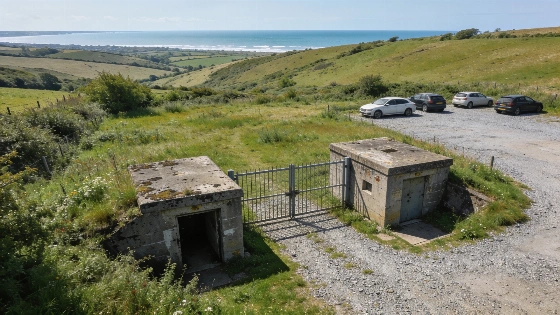
The plot covers approximately 225 square metres beside Crete Road West, with direct access from a basic road. The listing describes views towards France from the site’s highest point, opposite the North Downs Way walking trail. It has a gated entrance and outdoor space for up to six vehicles. Above ground, two concrete structures are visible. The basic chamber lies about four metres below the surface and is reached by a steep ladder. Miles & Barr describes the interior as dry, with a stable temperature throughout the year, and says the original equipment has been removed. Interior visits are prohibited for safety reasons, while exterior inspections are unaccompanied.
Part of a National Nuclear Network
The bunker formed part of the Royal Observer Corps, which began as an aircraft-spotting organization and took on a nuclear-monitoring role during the Cold War. Its observers reported detonations and gathered information about fallout. Subterranea Britannica estimates that 1,563 Royal Observer Corps posts were built across the UK. The property includes land and a decommissioned military installation. The auction listing does not present it as a ready-to-use home.
The sources cited for the site give different construction dates: Miles & Barr lists 1971, while Subterranea Britannica says the second Folkestone post opened in the 1960s. Both place its decommissioning in 1991, when its operational role ended.
Not a Residential Property
The listing does not describe the bunker as a habitable residence. Sam Fogarty of Miles & Barr told BBC Radio Kent that the underground space is surprisingly spacious, though most of it is concealed by the modest concrete structures above ground. The property has been marketed several times, with its military history and unusual position near a basic road among its distinctive features. The listing also notes a water inspection chamber about a metre from the boundary and an old, untested BT telephone line. Any new connections would require the relevant permissions and regulatory compliance. The agency suggests the land could be used to park a motorhome, but the sale is presented as land with a former bunker, not as a residential conversion.
Potential buyers can consult the Miles & Barr auction listing for the stated fees and documentation, along with access restrictions. The unusual sale has also drawn attention to the appeal of properties whose value lies in their history and location, much like the story of a Madrid plumber who profited from salvaging copper pipes during a home renovation, as reported in this feature on hidden value in home upgrades.