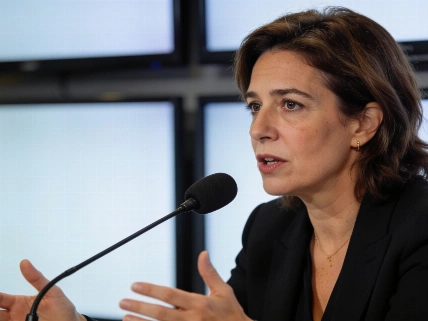
Cándido Conde-Pumpido is backing urgent amnesty enforcement by the Supreme Court. His draft ruling in the Dolors Bassa case would demand a clear and immediate response.
RTVE reports that Spain's Constitutional Court plenary is expected to discuss and vote on a draft ruling concerning Dolors Bassa on October 6, 2026. The proposal would direct the Supreme Court to apply the amnesty law urgently and preferentially. It also raises the question of how far the Constitutional Court can go in correcting the Supreme Court's interpretation of Fundamental Rights. Bassa remains disqualified until 2031, and the proposed ruling could lead to a new decision recognising that the embezzlement episode falls within the scope of the amnesty law.
Conde-Pumpido defended the approach at a Nueva Economía Fórum breakfast at the casino in Madrid. He said a constitutional ruling must be clear and precise, with enough force to be followed without uncertainty. In his view, the amnesty law requires priority because Fundamental Rights are involved, and the ruling should state that priority directly.
The draft uses wording that goes beyond the standard approach in an appeal for constitutional protection. Usually, the court sends a case back for a new ruling that respects Fundamental Rights. This proposal would also tell the Supreme Court to account for the amnesty law's urgent and preferential character. ABC had already reported the unusual wording in the draft prepared for the Bassa case.
Conde-Pumpido did not set a deadline for the Supreme Court to carry out the ruling. He said the Supreme Court had indicated it would consider constitutional doctrine if it were stated clearly and precisely. He presented clarity as the condition for compliance, while the Supreme Court would still handle the ruling's execution.
RTVE and ARA report that the October 6 plenary is being watched beyond Bassa's individual case because the ruling could shape the treatment of other people convicted of embezzlement in connection with the 2017 Catalan independence process. Their reports describe the dispute as part of a continuing conflict between the Supreme Court's interpretation and the Constitutional Court's developing doctrine on the amnesty law.
Conde-Pumpido rejected the claim that the Constitutional Court was exceeding its powers. His argument rests on a division of authority: the Supreme Court is the highest court across ordinary jurisdictions, while the Constitutional Court has the final word on Fundamental Rights. He said that role must still respect the autonomy of all three branches of government.
ARA has described the same position. Its reports say the Constitutional Court may require a new Supreme Court ruling when an interpretation conflicts with constitutional rights.
Conde-Pumpido also pointed to a 2015 reform introduced during Mariano Rajoy's government. It gave the Constitutional Court broad enforcement powers, including financial sanctions and the suspension of public officials. The court could also refer possible disobedience to prosecutors and set deadlines for compliance. He said Constitutional Court decisions have the status of res judicata and bind every public authority.
Asked about a possible return, he did not mention Puigdemont. He said an upheld appeal would be sent as soon as possible to the parties and to the ordinary court responsible for execution. The Supreme Court would retain its operational role, though the proposed instruction would be unusually direct.
An earlier court report said the Constitutional Court would not preview its ruling before the October 6 plenary on the embezzlement amnesty. The Bassa draft adds a separate institutional question: would the final text directly require urgency from the court that must apply it?
Conde-Pumpido also urged the Senate to renew its share of the Constitutional Court as soon as possible. Four magistrates are due to leave. The president is among them, and his mandate expired in December last year. The Senate has extended the deadline for candidates until November 30 at the request of the Parliament of Andalucía.
He said he would keep the court operating normally before later retiring to private life. He did not rule out serving on another body.
The so-called law of grandchildren also came up. Conde-Pumpido declined to discuss the proposed trap amendment because proceedings remain open before the Supreme Court's Third Chamber, which has adopted precautionary measures. He said the Constitutional Court respects decisions taken within its jurisdiction.
The final wording will determine the reach of the message. Conde-Pumpido is not setting the Supreme Court's timetable; he is backing a ruling intended to remove doubt about urgency. The order could become a binding instruction, or remain a constitutional standard that the Supreme Court applies through its own procedure.