Spain’s Constitutional Court has rejected Extremadura’s bid to overturn the amnesty law. This decision closes all constitutional challenges to the measure. Attention now shifts to unresolved appeals from Catalan independence leaders.
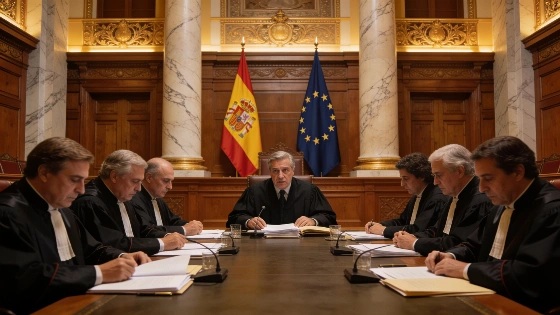
The Constitutional Court has definitively rejected the appeal filed by the Junta de Extremadura, led by María Guardiola, against Spain’s amnesty law. With this ruling, the court brings to a close all 16 constitutional challenges and six related questions that had been raised over the controversial legislation. The decision follows last week’s endorsement of the law by the Court of Justice of the European Union, reinforcing the legal standing of the measure within both Spanish and European frameworks.
In its statement, the Constitutional Court reaffirmed its established position that the Spanish Constitution does not prohibit amnesty. The judges also found no evidence of arbitrariness by lawmakers, noting that the law’s stated aim is to ease the political and social tensions stemming from the Catalan independence process. The court further clarified that the legislation does not infringe on judicial authority, nor does it violate the principles of separation of powers or legal certainty. According to the ruling, the law does not undermine the right to judicial protection and cannot be considered a form of self-amnesty for those involved.
Despite this comprehensive resolution, the court’s work on the amnesty issue is not over. Seven appeals for constitutional protection remain pending, all submitted by Catalan independence leaders who were denied amnesty by the Supreme Court. The Supreme Court determined that the amnesty law does not cover the specific charges of misappropriation of funds attributed to these individuals. The first of these appeals, filed by Jordi Turull, is scheduled for deliberation by the Constitutional Court’s full bench on September 22, after the summer recess. The outcome of this case is expected to set a precedent for the remaining appeals, which include those from Oriol Junqueras, Raül Romeva, Dolors Bassa, and leaders currently outside Spain such as Carles Puigdemont, Toni Comín, and Lluís Puig.
The handling of these appeals is complicated by the assignment of the Turull case to conservative judge José María Macías, known for his critical stance on the amnesty measure. If the majority of the court disagrees with his draft ruling, a new rapporteur will be appointed, potentially delaying the final decision until October. The doctrine established in these rulings will likely guide the Supreme Court’s approach to all similar cases, but if not, the Constitutional Court may have to address each appeal individually.
This latest development comes amid ongoing legal and political disputes over the scope and application of the amnesty law. The issue has already prompted further legal action, as seen when Oriol Junqueras and other former Catalan officials challenged the Tribunal de Cuentas for allegedly disregarding the EU’s position on the amnesty, a move detailed in a recent report on the ongoing legal battles involving Catalan leaders. The Constitutional Court’s decisions in the coming months are expected to have significant implications for the future of the amnesty law and its impact on Spain’s political landscape.
For context, the amnesty law was introduced by the Spanish government in response to the prolonged crisis triggered by the 2017 Catalan independence referendum and subsequent legal actions against its organizers. The law aims to address the legal consequences for those involved in the independence movement, but its scope and limits have been the subject of intense debate. The Constitutional Court’s latest ruling provides legal clarity on the law’s constitutionality, but the practical effects will depend on how the remaining appeals are resolved and how the Supreme Court implements the court’s guidance. The ongoing legal proceedings underscore the complexity of reconciling national unity, judicial independence, and political reconciliation in Spain.