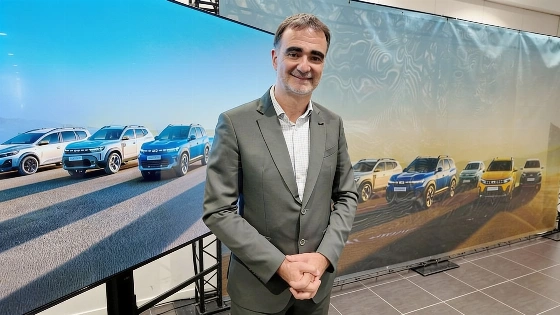
Dacia’s Spanish chief Laurent Sengenes warns that tangled and shifting incentives could freeze out buyers as fuel prices soar. He calls for direct, stable support and rolls out new models aimed at keeping electrified cars within reach.
Fuel prices in Spain have crossed the 2-euro mark per litre, putting pressure on drivers who rely on affordable transport. Laurent Sengenes, director general of Dacia España, sees the current incentive system as a roadblock for buyers considering electric cars. He argues that the maze of rules and sudden changes in support schemes risks shutting out those who need cheaper options most.
Sengenes doesn’t mince words. He points to a pile-up of regulations and shifting incentives that push up car prices, especially for budget models. “Sometimes we have too many regulations that increase the price of cars, especially for affordable cars,” he says. The fallout lands hardest on families already squeezed by rising costs.
The second-generation Dacia Spring will be produced in Europe, a shift from the current model, which may help it qualify for local support programs.
Dacia’s playbook calls for incentives that are both direct and predictable. Sengenes wants buyers to see the benefit at the dealership, not months later. He singles out the Plan Auto+ for its retroactive effect from January, calling it a positive step. But he warns that any pause or reversal could choke off electric sales just as momentum starts to build.
Gasoline costs keep climbing, and Sengenes says the push for electrification can’t slow down. Dacia’s answer is to offer electric, hybrid, and LPG models, all designed to keep running costs low. “We have technologies, precisely, to ensure the best cost of use for our clients,” he says. The brand’s focus is on shrinking the mobility budget for Spanish households.
The next move is already set. Dacia will launch the new Spring at the Paris Motor Show, with a pre-incentive price under 18,000 euros. Sengenes pitches it as “a very cool car, really, with very good habitability,” aimed at buyers who want practical electric mobility without a luxury price. The Spring is meant to anchor Dacia’s value-first approach as the brand adds more sustainable tech.
According to independent industry reports, the new Dacia Spring is built on the RG-EV Small platform, features an 80 hp electric motor, a 27.5 kWh battery, and offers up to 250 km of range (WLTP). Orders for the new generation have already opened in France, while the Spanish market is still awaiting final pricing and launch dates.
Dacia isn’t betting everything on battery-only cars. Hybrid tech now runs across its full range. The Sandero, Dacia’s top seller, leads the way, joined by hybrid versions of the Jogger, Duster, and Bigster. Sengenes highlights the Spanish roots of this technology: “It is a technology Made in Spain, developed in Spain, manufactured in Spain, with more than 1,000 engineers in Valladolid.” The Sandero hybrid posts a consumption figure of 4.2 litres per 100 kilometres, a number that matters as fuel prices bite.
Dacia plans to launch four electric models before 2030. The target is for two-thirds of Spanish sales to be electrified vehicles by then. The brand also wants 30% of its sales to come from the C-segment, with models like Jogger, Bigster, and the future Striker in the mix. Sengenes draws a line: growth must fit Dacia’s business model and values. “What we want to do and aspire to is to continue growing, and to continue growing while respecting our Dacia business model and our values.”
Chasing volume for its own sake is off the table. “I think it is value... it is very important to have value before volume,” Sengenes says. The strategy is to build a sustainable business, not just rack up registrations. This approach carries into higher segments, where Dacia is rolling out Bigster and preparing Striker, always watching what buyers will pay and the efficiency they expect.
The hurdles facing Dacia are familiar across Spain. The country’s electric transition has stumbled on patchy infrastructure and policy swings, as shown in recent reporting on underused charging stations. Sengenes’s takeaway is blunt: without stable, transparent support, even the best tech can stall before it hits the mainstream.