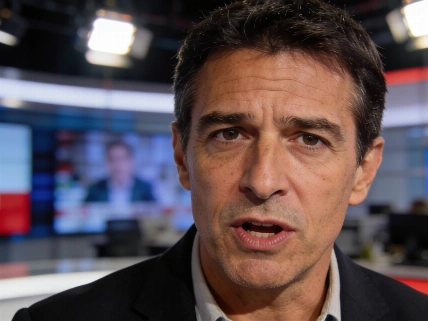
Gabriel Rufián wants to lead ERC in the 29 November 2026 election, but only with backing from other left-wing and antifascist forces. Party leaders still support him.
The next general election is scheduled for 29 November 2026, while ERC is still working out who will head its Barcelona list.
Gabriel Rufián, the party’s spokesperson in Congress, wants to represent Esquerra Republicana. He does not want to enter the contest alone. His condition is support from other left-wing and antifascist forces.
That puts the coalition first and the candidate second.
ERC’s rules allow a candidate for the top position on the Barcelona list to enter the contest with the support of 5% of party members—around 400 signatures—or through backing from a third of the National Executive Committee or a quarter of the National Council.
In a message posted on X on Thursday, Rufián said he was working to secure the conditions needed to face the election with sufficient guarantees. He made clear that his preferred campaign would include forces outside ERC because, in his view, the party cannot win the contest by itself. He also said he intended to pursue the arrangement until the end.
The statement landed as a second ERC figure entered the internal discussion over Barcelona. Jordi Albert, the party’s deputy spokesperson in the Catalan Parliament and a figure close to ERC leader Oriol Junqueras, has put himself forward for a place on the list, according to sources from the party leadership. He is not seeking the top position.
The timing gave Rufián’s message a clear internal edge.
Jordi Albert represents the Baix Llobregat federation, one of ERC’s largest party organisations. He has begun collecting internal endorsements for a place on the Barcelona list while stating that he is not seeking its top position.
ERC’s leadership continues to back Rufián as its number one candidate for Barcelona. Oriol Junqueras has said Rufián will lead the list, yet Rufián himself had not formally confirmed that he would take part. The endorsement has therefore failed to settle his demand for a broader front involving Sumar and Podemos.
Podemos has added a separate obstacle. The party says it is ready to contest the election in a coalition with Sumar and the new Frente Amplio, but it wants open primaries to choose the lead candidate. That leaves no automatic route for Rufián to become the alliance’s common leader. Frente Amplio has called on Podemos to unite with Sumar, although the coalition format and nomination process remain unresolved, according to RTVE.
Rufián has tried to keep the dispute from turning into a public feud. He said he would not enter a political serial or attack anyone despite what he called lies and leaks. His public position remains restrained in tone and firm in substance: he wants the candidacy alongside a coalition built around it. Sources close to him told RTVE that he was “reflecting and listening” before making a final decision about his role.
The dispute also covers the influence Rufián would retain if he agreed to stand. Diario de Navarra reported that people around him were seeking minimum guarantees of participation and influence over ERC’s strategic direction in exchange for his decision to run. The argument is about more than the order of names on the Barcelona list.
There are signs that an alliance with Sumar and Podemos remains unsettled. Libertad Digital reported that Sumar was not considering Rufián as a possible common leader, while linking the initiative to Podemos and Irene Montero. The report came from the publication and has not been confirmed by an official Sumar statement, so it does not establish the party’s position.
Rufián’s candidacy now depends on two unresolved demands. ERC and its potential partners must accept the coalition conditions he considers necessary. Podemos must also decide whether the open-primary process it demands can govern the alliance.
For ERC, the leadership still prefers Rufián at the top of the Barcelona list. Jordi Albert’s move adds another name to the internal process, but it does not displace that preference. The party’s rules require 5% of member signatures, around 400, or support from a third of the National Executive Committee or a quarter of the National Council.