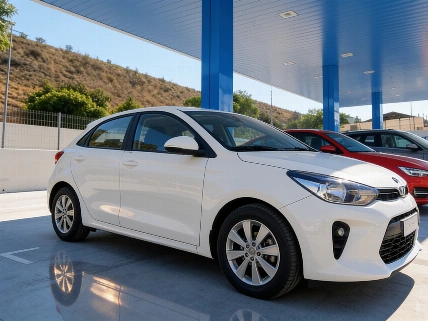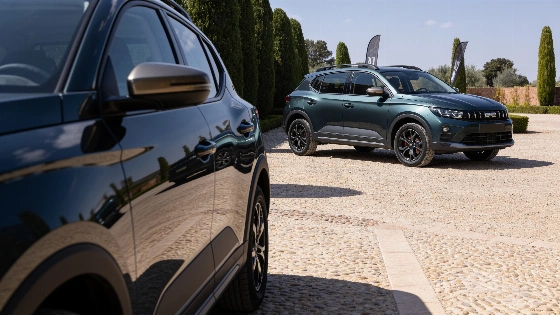
Dacia’s Sandero Stepway hybrid 155 arrives as the most accessible hybrid in its class, built in Spain and priced to undercut rivals. The model promises low fuel consumption and practical tech, aiming to keep its lead in the Spanish market.
The Dacia Sandero Stepway hybrid 155, now produced in Valladolid, is shaking up the market for drivers watching their budgets. It’s the lowest-priced full hybrid in the B segment, offering 155 horsepower, solid efficiency, and a price that puts pressure on established brands like Toyota.
Dacia’s reputation has changed a lot in recent years. Once seen as a bargain brand, it’s now a regular fixture at the top of Spain’s sales charts—especially with the Sandero, which has led the market for 13 years straight. The new hybrid 155 model is designed to keep that run going. Its engine, developed by Horse (a partnership between Renault Group, Geely, and Aramco), combines a naturally aspirated 1.8-liter four-cylinder petrol engine with two electric motors and a 1.4 kWh battery. Together, they deliver 155 CV through an automatic multimode gearbox assembled in Seville.
According to several Spanish automotive publications, the first customer deliveries of the Sandero Stepway Hybrid 155 in Spain are expected by the end of October 2026, though this date is not yet universally confirmed by Dacia.
Officially, the Sandero hybrid 155 is rated at 4.2 liters per 100 km for the standard hatch and 4.4 liters for the Stepway. In mixed driving—city, highway, and secondary roads—the Stepway hybrid 155 averaged about 5 liters per 100 km, even with two adults, luggage, and the air conditioning running. Dacia claims up to 80% of city driving can be done in electric mode. In practice, this holds up for short urban trips, but the small battery limits how far you can go on electricity alone.
On the road, the hybrid system is smooth. The automatic transmission splits into four gears for the petrol engine and two for the electric motors, so power delivery is steady and quiet. The Stepway’s lighter build helps the hybrid setup, and the suspension is tuned for comfort without feeling loose. Eco and E-Save modes let drivers focus on efficiency or save battery for city driving.
Inside, the Sandero hybrid 155 keeps things straightforward. There’s good space for two up front, a 10.1-inch central touchscreen with Google services, and wireless Apple CarPlay and Android Auto. The digital instrument cluster is clear and easy to read. Hard plastics remind you this is a value-focused car, but nothing feels flimsy or likely to wear out quickly.
Multiple independent sources confirm that the hybrid system achieves CO₂ emissions as low as 96 g/km under WLTP testing, making it one of the cleanest options in its segment. The automatic multimode gearbox is assembled in Seville, Spain, and the hybrid powertrain is a product of the Horse joint venture, reflecting Dacia's commitment to local manufacturing and engineering.
Pricing is straightforward. The Sandero hybrid 155 starts at 19,890 euros for the Expression trim and 20,890 euros for the Journey. The Stepway hybrid 155, with its more rugged look, is priced at 21,290 euros (Expression) and 22,690 euros (Extreme). For comparison, the entry-level petrol Sandero starts at 14,490 euros, and the LPG-powered ECO-G 120 version is 15,490 euros. The Stepway’s petrol and LPG versions both start at 15,890 euros.
Sales numbers show Dacia’s approach is working. Since 2008, more than 400,000 Sanderos have been sold in all markets, and 76% of Spanish buyers keep their car as sole owners. The Sandero’s strong position in Spain comes from a focus on value, reliability, and now, a credible hybrid option.
The Sandero hybrid 155 is built for daily use, but it’s also a direct competitor to Toyota, which has long led the affordable hybrid segment. The Spanish-built engine and transmission reflect a trend toward local manufacturing for electrified cars, which appeals to buyers concerned about import costs and supply chain issues. This is part of a wider shift, as seen with the recent Volvo XC60 update that increased electric range and focused on European production.
Dacia is also preparing to launch the Striker crossover for under 25,000 euros. The Sandero hybrid 155 shows that affordable electrification is now a real option for Spanish drivers. The brand’s move from budget label to mainstream contender is backed by engineering and local investment. For buyers looking for a hybrid that delivers on price, efficiency, and everyday practicality, the Sandero hybrid 155 is a clear sign that the Spanish car market is changing—and rivals will need to keep up.