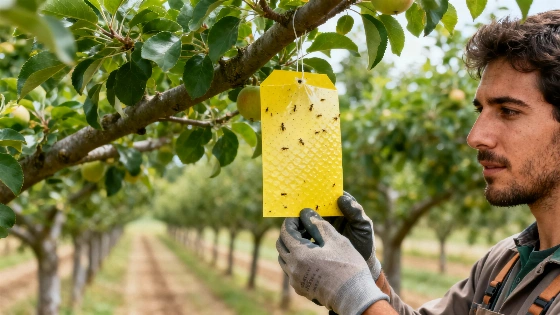
Three Specimens of Bactrocera dorsalis Detected in Cantabria — What This Means for Spain. Cantabria has recorded the first appearance of the oriental fruit fly, one of the most destructive pests for fruit crops. Experts are concerned about potential threats to harvests and farmers' incomes, but at this stage, there is no sign of widespread infestation.
In October 2025, three specimens of the oriental fruit fly Bactrocera dorsalis were captured in the municipality of Astillero (Cantabria) — the first occurrence on Spanish territory. The detection was made thanks to official traps installed by the Ministry of Agriculture. Although no focus of infestation has yet been reported, the very appearance of this pest has caused concern among farmers and experts.
According to local authorities, the insects may have entered the region with imported fruit products from Asia. The European and Mediterranean Plant Protection Organization notes that Cantabria's climate is considered unsuitable for the fly's permanent presence. Nevertheless, even isolated cases require heightened attention: Bactrocera dorsalis can affect more than 120 plant species, including citrus, stone fruits, avocados, persimmons, and vegetables.
Why the oriental fruit fly is dangerous
Bactrocera dorsalis is one of the most aggressive and rapidly spreading pests among fruit flies. Females lay eggs directly into the flesh of fruits, after which the larvae destroy the crop from within and contribute to the development of fungi and bacteria. As a result, the fruit becomes unfit for sale and consumption.
The economic damage caused by this fly can be significant: it quickly adapts to new conditions, reproduces and spreads, and in the last 30 years has already been detected in 70 new countries, including European regions. In Italy, for example, persistent outbreaks have been recorded since 2018, forcing authorities to introduce special control measures.
Why Spain and the Canary Islands Are at Risk
Spain accounts for about 40% of all fruit orchards in the European Union and remains the only EU country with major commercial production of tropical and subtropical fruits. The Mediterranean climate of most of the country, and especially the subtropical climate of the Canary Islands, create favorable conditions for the pest to establish itself.
The Canary Islands are particularly vulnerable: there are no winter frosts here, and most of Spain’s papayas as well as nearly all European bananas are grown on the archipelago. In addition, the Canaries are a key logistics hub for cargo from Africa, where the oriental fruit fly has long been established.
Distribution Geography and Europe's Experience
Bactrocera dorsalis is considered native to India, but today it is found throughout tropical Asia, most countries of sub-Saharan Africa, in Hawaii, and occasionally in California and Florida. In Europe, this pest is recognized as a priority threat: outbreaks have become regular in Italy since 2018, while in other countries—France, Austria, Belgium, Denmark, and the Netherlands—there have only been isolated cases, all of which were successfully contained.
For Spain, the current situation marks the first confirmed case, which is why agricultural organizations are demanding immediate strengthening of control and preventive measures.
What Measures Are Being Taken
In response to the detection of the eastern fruit fly, La Unió Llauradora has appealed to the Valencian authorities to urgently step up monitoring and prevention efforts. Particular attention is being given to citrus and other strategic crops. Measures include installing additional traps, introducing quarantine zones, banning the export of fresh fruit from potentially affected areas, removing fallen fruit, and applying targeted insecticide treatments.
Modern control methods are also being considered: the sterile insect technique (releasing sterile males to reduce the population) and eliminating males using special traps with attractants. The main goal is to prevent the pest from establishing itself and spreading to the country's key agricultural regions.
So far, only isolated detections have been recorded, but the experience of other countries shows that delays can lead to serious economic losses. In the coming months, close attention will continue to be paid to traps and monitoring.