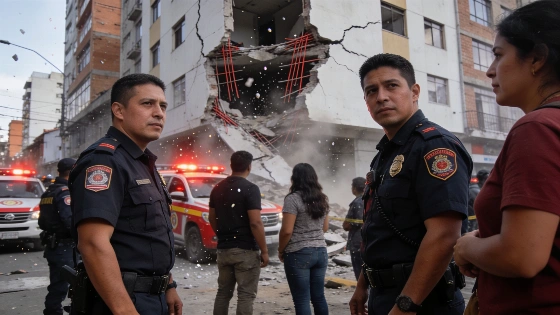
A magnitude-7.4 earthquake struck western Colombia on 10 August 2026, with its epicenter near San José del Palmar in the department of Chocó. The initial toll of 51 deaths was later superseded as authorities continued compiling casualty figures. An October balance reported by EFE, citing Colombia’s National Unit for Disaster Risk Management (UNGRD), put the toll at 335 dead. It also reported 4,516 injured people and 103 missing. The earthquake was described as the strongest recorded in Colombia during the 21st century.
The impact extended well beyond the epicentral area. Subsequent reporting said the tremor affected 497 municipalities across 16 departments. Valle del Cauca and Risaralda accounted for most fatalities in an UNGRD tally, while Chocó also recorded deaths. A damage balance cited by Noticias RCN reported more than 30,000 homes destroyed and about 137,000 damaged. Search-and-rescue operations were followed by demolition and shelter work, then reconstruction in the hardest-hit areas.
The disaster also drew attention to the experiences of people caught up in the quake, including Spanish singer David Bisbal. Colombia’s response was led through the UNGRD emergency-management system, which coordinated casualty and damage reports. On 21 October, roughly two months after the earthquake, the country held its National Emergency Response Drill, involving 1,046 municipalities and drawing on lessons from the disaster. The exercise involved residents and local authorities, including schools and businesses, with a focus on evacuation and coordination.
The earthquake came just over a month after Venezuela experienced a double tremor, highlighting the region’s ongoing seismic risks. As noted in a recent report on previous seismic activity in Colombia, such events have prompted emergency evacuations and heightened awareness of building safety standards in the area. The August disaster affected communities across a wide area, while the subsequent national drill put preparedness and coordinated emergency response at the center of public attention.