Abelardo de la Espriella, Colombia's new president, has promised to govern from the regions. He plans to decentralise power and travel across the country. The move signals a shift away from Bogotá's traditional dominance.
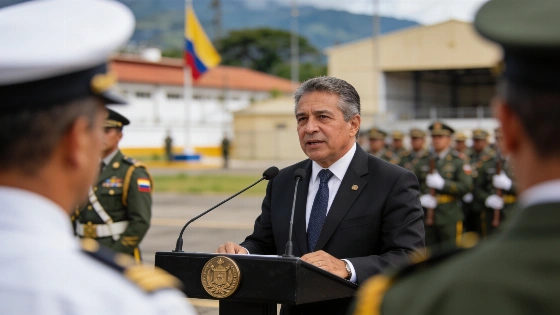
Colombia's new president, Abelardo de la Espriella, has announced a major shift in the country's political approach by promising to lead his administration from outside the capital. In his inaugural address delivered at a military base in Cali, De la Espriella referenced the historic words of Spanish leader Adolfo Suárez, pledging to govern directly from the regions and to maintain a visible presence throughout Colombia during his term.
De la Espriella, who has positioned himself on the far right of Colombia's political spectrum, stated that he would dedicate all his energy to visiting communities nationwide. He emphasised that no citizen should feel neglected by what he calls the 'Government of the Tiger', underlining his commitment to restoring state authority in every part of the country. The president also reiterated his intention to work tirelessly so that, by the end of his mandate, Colombians can say that government authority is once again felt in every corner of the nation.
In a move to decentralise executive power, De la Espriella previously announced plans to establish alternative presidential offices in Barranquilla, Cali, and Medellín. He also intends to transform the Casa de Nariño, the traditional presidential residence in Bogotá, into a museum. This strategy is designed to reduce the concentration of political power in the capital and bring decision-making closer to regional communities.
The inauguration ceremony also saw the president of the Senate, Honorio Henríquez, draw parallels with Spain's transition to democracy. Henríquez highlighted the importance of reconciliation and collective purpose, referencing how Spanish political leaders overcame deep divisions after the Civil War and decades of dictatorship to negotiate a new political and economic path for the country. He pointed to Spain's example in 1977 as a model for overcoming entrenched conflicts and building a more prosperous society.
Colombia's political system has long been criticised for its centralisation in Bogotá, often leaving regional voices underrepresented. De la Espriella's proposals echo a broader trend in Latin America, where decentralisation is increasingly seen as a way to address regional disparities and strengthen local governance. The transformation of the Casa de Nariño into a museum would mark a symbolic break with tradition, while the establishment of regional presidential offices could set a precedent for future administrations. As Colombia faces ongoing challenges related to security, economic inequality, and regional development, the effectiveness of these changes will be closely watched both domestically and internationally.