A Delta flight from Barcelona to Boston was diverted to Porto when smoke appeared in the cabin. Eight passengers received medical attention on the runway, with three taken to hospital. The incident highlights the risks airlines face with in-flight technical issues.
Passengers on Delta flight DL251 saw their trip from Barcelona to Boston cut short on Sunday. Smoke filled the cabin mid-flight. The crew had to act fast. They diverted the Airbus A330 to Porto, Portugal. Delta confirmed a mechanical problem caused the smoke.
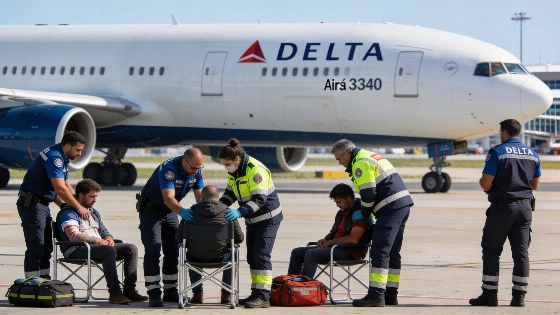
As soon as the plane landed at Francisco Sá Carneiro Airport, emergency teams rushed to the tarmac. Eight people needed medical help right there. Three were taken to hospital for further care. Portugal’s emergency and civil protection services confirmed these details in a call with Reuters.
According to official reports, there were 296 people on board the Delta A330 when the emergency occurred, and some passengers used oxygen masks during the incident.
Flight data from Flightradar24 shows the plane left Barcelona at 15:15 local time. It landed in Porto at 17:45. The Atlantic crossing never happened. Delta said the landing itself went smoothly. But the smoke in the cabin left the crew with no choice. They had to land right away.
The airline has not said what exactly went wrong with the plane. What started as a normal long-haul flight turned tense in minutes. Medical teams were already waiting before the plane even reached the gate. The situation changed fast.
Most people on board got off safely. Still, the need for medical help on the runway and hospital trips shows how serious things got. This kind of emergency puts pressure on airlines flying over the Atlantic. There are not many places to land in a crisis. Quick action is key.
Portuguese emergency services told Reuters that the cause of the diversion was smoke in the cabin, while Delta officially described the event as a mechanical issue. This distinction highlights how technical malfunctions can quickly escalate into visible safety threats, especially on transatlantic routes where alternative airports are scarce.
Delta’s crew moved fast. They diverted the flight, got medical help on the ground, and kept passengers informed. Even well-kept planes can face sudden problems. The safe landing and quick care for those affected show why strict safety rules matter. For travelers, this is a sharp reminder. Air travel is safe, but there is little room for error. Being ready makes all the difference.