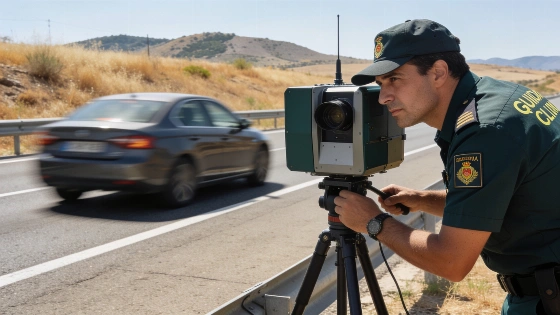
Starting August 3, Spain’s Dirección General de Tráfico (DGT) is launching a nationwide speed-enforcement campaign, adding new cameras and stepping up monitoring through August 9. The operation comes as the country enters its busiest summer travel period, when millions are expected to take to the roads for their holidays.
Information from DGT data, excessive speed was a factor in 307 fatal crashes in 2024, accounting for 22% of all deadly crashes recorded by the agency. The campaign is part of Spain’s broader Road Safety Strategy 2030, which prioritizes reducing deaths linked to speed. The European Transport Safety Council (ETSC) estimates that lowering average speeds by just 1 km/h could prevent more than 2,200 deaths annually across the EU, while a 10 km/h increase can raise the risk of a fatal crash by 220%.
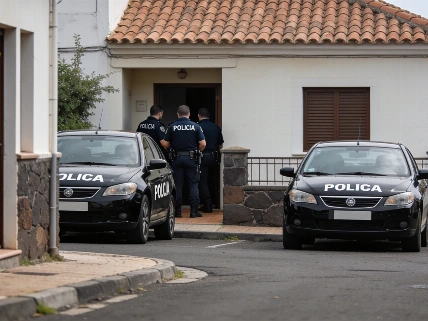
Coordinated across Europe through the RoadPol network, the operation brings together Spain’s Guardia Civil Traffic Division and police forces at regional and local levels, stepping up roadside checks. Enforcement will cover conventional roads and highways, with urban routes also in scope. Authorities will focus particularly on sections where speeding is a known risk factor.
Five new speed-control points are being added: one fixed camera and two bidirectional section controls on the CM-412 in Albacete, the N-110 in Segovia and the CL-101 in Soria. The new cameras will be signposted, and their locations will appear on the DGT website for integration into navigation systems. The DGT also publishes information about sections where mobile radars are deployed through its institutional channels.
During the first month, drivers caught exceeding the limit will receive a warning; formal penalties will apply after the grace period. At 30 km/h, the risk of death in a collision is about 5%. The likelihood of survival drops sharply above 80 km/h.
The DGT says speeding fines range from €100 to €600, with up to six licence points at stake. Exceeding the limit by more than 60 km/h in urban areas or 80 km/h on interurban roads can lead to prison or community service, and may also bring a driving ban.
The campaign coincides with preparations for the August 12 total solar eclipse, an event not seen in Spain since 1912 that is expected to increase road travel. The DGT plans to distinguish between people travelling specifically to observe the eclipse and other road users, adapting its controls accordingly.
Drivers concerned about vehicle compliance can find practical advice on passing Spain’s ITV emissions test in this guide to avoiding common inspection pitfalls.