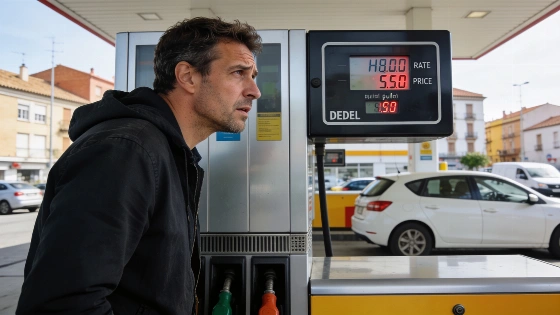
Motor journalist Juan Francisco Calero warns that diesel in Spain could soon cost 2.40 euros per litre, putting a 50-litre tank at 120 euros. Prices could rise within weeks, depending on whether the government extends fuel subsidies beyond September.
Pressure is building as government support ends and Europe’s fuel supply changes. Spanish drivers have benefited from tax breaks and pump discounts, including lower VAT and per-litre rebates designed to soften inflation. The measures are due to end on September 30, 2026, unless the government extends them. The current discount is 20 cents per litre for diesel and 5 cents for gasoline. Once discounts end and taxes return to normal, diesel prices will rise regardless of movements in the global crude oil market. Industry estimates put the potential increase at about 24.2 to 24.4 cents per litre, more than the current nominal discount because of tax and market structure.
Government policy is only part of the picture. Calero points to the closure of many European oil refineries, particularly those producing diesel, which has left Europe dependent on imports from outside the EU. That leaves the market more exposed to global supply disruptions and rising demand from trucking and shipping, with heavy industry adding further pressure. Production and transport costs have risen, and drivers are paying more at the pump. The Spanish Ministry of Energy said diesel was already close to 1.89 euros per litre by mid-September 2026, a sharp rise in just a few weeks.
For Spanish drivers, pump prices now reflect more than Brent crude. Required biofuel blends and higher oil company margins have added to the cost, as have more expensive logistics within Spain. Calero says these are now the basic factors shaping what consumers pay, alongside oil prices. Industry sources estimate that if support measures end, filling a 50 to 55 litre tank could cost 12 to 13 euros more.
Geopolitical tensions are adding to the pressure. The conflict in the Middle East, particularly near the Strait of Hormuz, has made oil shipping riskier. Tankers are being forced onto longer, more expensive routes, while shipping insurance costs are rising. Calero says Spanish stations are unlikely to run out of diesel, but the cost of getting fuel to market will keep climbing.
The International Road Transport Union (IRU) says September 30 is a critical date for Spain and several other EU countries. Tax and subsidy measures are due to expire at the same time, potentially adding pressure to fuel prices and the transport sector.
Some drivers are considering switching to electric cars. New rules have made it easier to install home chargers, as reported earlier. But for millions who still rely on diesel, the coming months could change the cost of daily travel.
As fuel aid ends and basic refineries remain closed, diesel prices in Spain are being shaped by oil markets, with global shipping, regulatory costs and geopolitics adding pressure. Cheap diesel could soon be a thing of the past unless the government intervenes or market conditions change.