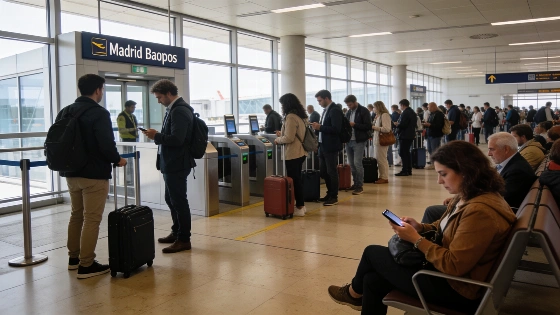
Spain’s domestic air traffic is climbing again. AVE high-speed rail disruptions and Ryanair’s retreat have shifted passengers to airlines. Vueling now dominates national routes, while regional airports feel the impact.
Domestic air travel in Spain is picking up as rail problems and airline changes reshape how people get around the country. The biggest increases are on routes where the AVE high-speed train used to be the main option. Flights between Madrid and both Malaga and Seville have seen double-digit growth. Ryanair, meanwhile, has pulled back from many regional airports, leaving gaps that only a few airlines have stepped in to fill.
Data from Aena shows that 33.5 million people flew on domestic routes in the first half of the year, up 1.5% from the same period last year. International travel is growing even faster, but the turnaround in domestic numbers stands out. The main reason: a series of AVE service disruptions, including the aftermath of the Adamuz accident in Córdoba, which forced many travelers to look for alternatives.
In August 2026, Spain's airports handled 34.89 million passengers, marking a 4.7% year-on-year increase, according to official Aena figures.
Madrid-Barajas airport is at the center of this rebound. Flights to Malaga are up 23%, to Seville 18%, and to Valencia 12%. The Madrid-Barcelona route, long the country’s main business corridor, lost 13% of its air passengers in 2025. This year, it has regained 4.4% of that traffic. Vueling plans to return to the route in October, joining Iberia and Air Europa.
Vueling now leads Spain’s domestic market, adding 752,000 passengers—a 7% increase—and holding about a third of all domestic traffic. Iberia is still second, though it continues to deal with engine problems. Volotea and Binter are also growing quickly. Volotea is up 27%, and Binter 11%, with Binter focusing on flights between the Canary Islands and major cities on the mainland.
Ryanair’s partial exit has had a clear effect. The airline has lost 1.16 million domestic passengers—a drop of 22%—between January and August compared to last year. Ryanair is now focusing on bigger airports and international routes. Many of the regional flights it dropped have not been replaced, leaving fewer options for travelers outside the main hubs.
Aena manages 46 airports and 2 heliports in Spain, as well as airports in London and Brazil, which means its published statistics reflect a broad international network, not just domestic Spanish operations. This context is important when interpreting passenger figures and market trends.
Several factors are behind the renewed interest in flying within Spain. Besides the AVE’s problems, airlines have added more flights and improved connections. Air travel is often more reliable, and the Canary and Balearic Islands continue to draw tourists. On many routes, flying saves significant time compared to the train, especially where rail is not a strong competitor.
International travel now makes up over 82% of Spain’s total airport traffic, but the domestic market is holding steady. The current situation shows that when rail service stumbles, airlines move quickly to fill the gap—though not all carriers are able to take advantage. Vueling’s rapid growth and the targeted expansion by Binter and Volotea point to a sector that is still changing. The numbers suggest that Spain’s domestic air market reacts quickly to problems in other transport modes, and airlines that can adapt fast will continue to shape how people travel within the country.