Women artists are putting research onstage, but many still pay for their own projects. The Netherlands hosts the only significant flamenco festival led by a woman.
Alicia Morales spent more than three years researching singer El Mochuelo, whose early recordings and influence she says have been underestimated. Her project, Honores a El Mochuelo, comes to the Sala Negra at the Teatros del Canal on 22 October. The festival programme lists the premiere as Honores a Antonio “El Mochuelo”. Morales wrote and performs the work. Jerez guitarist José Quevedo “Bolita” accompanies her.
Morales is part of a growing group of flamenco artists using their own authority to add knowledge to the art form. Parity in music programmes has lost even its value as a promotional strategy, according to the source account. The Netherlands hosts the only significant flamenco festival directed by a woman: Ernestina Van der Noort organises it.
The 21st Suma Flamenca runs from 13 October to 1 November 2026, with 47 galas and 33 absolute premieres. Its theme, Flamencas, honours women’s role in cante jondo. Carmen Amaya is the edition’s visual symbol. Carmen Linares and Rocío Molina are on the programme. Aurora Vargas and Mercedes Ruiz are also booked. Patricia Guerrero appears alongside Argentina. Lucía la Piñona and Sandra Carrasco will perform, as will Morales. Male performers include Israel Galván and Farruquito. Jesús Carmona is also on the bill.
The research takes shape in live performance.
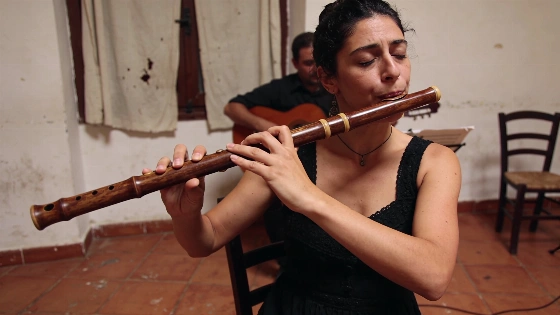
Trinidad Jiménez performs at Suma Flamenca on 18 October at the Pilar Miró cultural centre. She plays the bass flute, which she introduced to flamenco when the transverse flute was the norm. Her project, Raíz Sureste 2026, explores sounds from Almería and Granada. Material from Málaga also enters the journey. Singer and percussionist Desirée Paredes joins the ensemble. Julián Olivares plays guitar and tres cubano. Juanfe Pérez handles bass and percussion, while Nasrin Rahmani plays percussion.
Jiménez’s research turned up a family connection: her grandmother was a skilled dancer of “robaos”, a little-known style related to verdial. Jiménez also argues for a history of flamenco that gives credit to contributors beyond its stars. Her work includes a doctoral thesis on Jorge Pardo.
Morales’s research centres on a male singer. She says El Mochuelo recorded more than anyone else in flamenco history, then died poor and on the street. Her study draws on recordings held by music archaeologist Carlos Martín Ballester. Morales has also brought forward a style of guajira associated with El Mochuelo. It differs from the tonalities promoted by Antonio Mairena. The festival presents her project as a tribute to the singer known as the “king of the farruca”.
That work follows a shift associated with Carmen Linares. Her Antología de la mujer en el cante challenged a history that had placed women closer to melodic styles than to cante jondo. Linares chose the singers for the anthology herself, drawing on her artistic standing to revise the canon. She is due to perform it at Suma Flamenca on 27 October, marking three decades since the album’s release. Linares is also one of the central women artists in the festival’s 2026 programme.
Other artists are extending the work. Mayte Martín is recognised for her knowledge and distinctive artistic and ethical approach. Rocío Márquez combines research with singing and has expanded flamenco through its margins. Sandra Carrasco has worked on Recordando a Marchena. Laura Marchal’s project is La semilla del encanto. Ana Brenes has created Mientras camino.
Many of these artists have financed their own projects. Jiménez teaches at Universidad Alfonso X El Sabio and performs for other artists. Morales previously took on extensive work to save money for her project. They say they would not change that choice, but want more festivals such as Suma Flamenca to give them space. They still describe their cultural contributions as a “madness” or a “whim”.