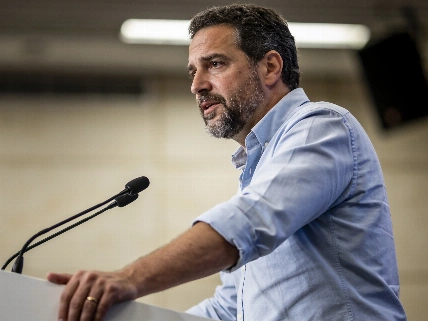
Alberto Rodríguez will lead Drago Canarias in the 29 November general election after the party chose to run alone. The former Podemos organiser also backs a proposed residence law tied to the islands’ carrying capacity.
In January 2024, the Constitutional Court found that Alberto Rodríguez’s right to perform his parliamentary duties had been violated and annulled the agreement that removed him. He could not regain his seat because the legislature had ended. Now he is seeking a return with Drago Canarias, which will run alone in the 29 November 2026 general election. It will be the party’s first campaign for Spain’s Congress, with candidates in both Canary Islands constituencies.
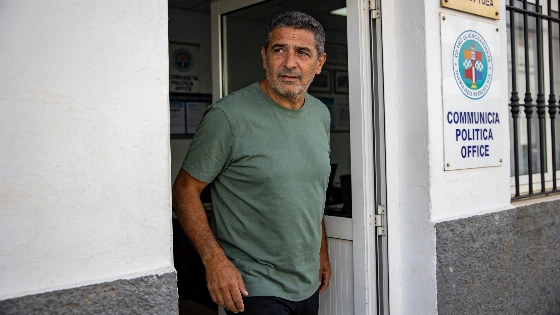
The decision to stand separately was made without Rodríguez at a party meeting in La Oliva, Fuerteventura. He was working a night shift at the refinery in Santa Cruz de Tenerife. The 44-year-old former Podemos organiser and Drago president will head the list for Santa Cruz, while Héctor Morán is the candidate for Las Palmas. Morán has presented the party as a sovereignist, progressive alternative to Spain-wide left-wing formations, focused on representing Canary Islands interests directly in Madrid.
Drago says it is acting after failed alliances with state-wide left-wing parties. Rodríguez accuses his former allies of sidelining Canary Islands demands and says the party wants political decisions made in the archipelago. He led Podemos’s organisation from 2019 and now describes the party as centralised. Morán has called Drago the only clear proposal on the Canarian left. He has outlined a platform focused on residence rules and the islands’ economic model, with transparent public participation in decisions taken in Congress as another priority.
Morán submitted 2,621 signatures in support of Drago’s congressional candidacy, against a reported legal requirement of 920 endorsements. The signatures qualified the party to stand but do not determine its electoral support. Its candidates will contest both provincial constituencies, Las Palmas and Santa Cruz de Tenerife.
His electoral record is mixed. Drago won about 30,000 votes in the 2023 regional elections but gained no seats in the regional parliament. Rodríguez received 53,632 votes in Santa Cruz in that year’s general election under the Sumar banner, falling about 1,500 short of a seat, information from his calculation. He hopes to win back voters who supported him then.
Drago’s most contentious proposal is a law regulating residence in the islands. Rodríguez links it to pressure on housing and public services, as well as the archipelago’s limited water resources: the Canary Islands have about 2.3 million residents and receive around 18 million tourists a year. He argues that people arriving from wealthier European countries can compete for homes with higher salaries and greater assets. The proposal is part of Drago’s broader platform on the islands’ economic model and is presented as a response to pressure on housing, public services and water resources.
Rodríguez says the proposal would be based on carrying capacity rather than race or origin. He envisages exceptions for family reunification and people seeking international protection, including those persecuted because of their sexual orientation. He points to the legal arrangements of the Åland islands in Finland as a reference, but has not explained how limits would be calculated or which authority would decide individual cases. A broad restriction on settlement would face legal difficulties.
He also wants limits on tourism, arguing that visitor numbers have not delivered better wages or reduced precarious work. Drago proposes a transition that would develop the basic sector, while also building activity in audiovisual production and renewable energy. Rodríguez has not specified how many visitors should be turned away, how jobs would be replaced or what investment would be required. Separately, the Canary Islands government has been considering a tourism law that would cover accommodation renovation and set standards for sustainability and quality, alongside rules on land use in tourist areas.
If Drago wins a decisive seat, Rodríguez says it would seek greater Canary Islands control over airports and territorial waters. He criticises Aena’s role in the archipelago and has raised concerns about Spain’s policy towards Morocco and Canary Islands interests in the Atlantic, including resources around the Tropic seamount.
Rodríguez lost his seat on 22 October 2021 after a Supreme Court conviction linked to a 2014 protest in La Laguna against a visit by minister José Ignacio Wert. The Constitutional Court later left the fine in place while annulling the prison and disqualification rulings; it also found that the parliamentary decision to remove him violated his rights. By then, the legislature had ended. Before entering politics, Rodríguez worked at the Santa Cruz refinery, where he returned after leaving Congress.