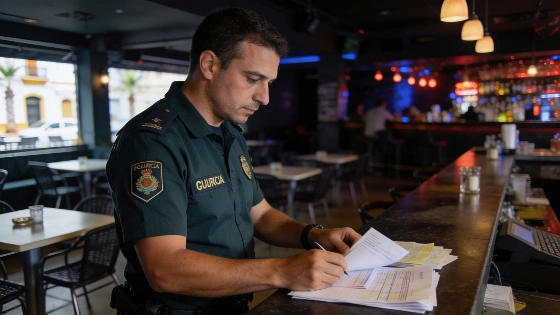
Authorities in Cádiz have uncovered complex money laundering networks tied to drug trafficking. Local nightlife businesses, frontmen, and crypto assets are at the center of ongoing investigations. The crackdown exposes new tactics used by criminal groups.
Law enforcement in Cádiz has intensified its focus on sophisticated money laundering operations linked to drug trafficking, with recent arrests highlighting how criminal profits are being funneled through the region’s hospitality and nightlife sector. The latest investigation centers on Mario García and Pascual Llopis, both now in pre-trial detention, accused of using legitimate-looking businesses to disguise proceeds from narcotics sales.
According to case files accessed by EL PAÍS, García and Llopis managed several restaurants and a nightclub in El Puerto de Santa María. In July 2023, they expanded the capital of one of their companies, bringing in a new partner who quickly questioned the legitimacy of the arrangement. García, aware of his criminal record, relied on Llopis—a respected nightlife entrepreneur—to act as the public face and signatory, a tactic that investigators say is increasingly common among local traffickers.
The Guardia Civil’s operation Sorela has revealed a web of over 18 companies, many tied to hospitality venues such as the chiringuito Margarita and Banana, as well as festival-related firms like Puro Latino SL and Luna Bahía SL. These businesses not only handle large volumes of cash but also benefit from sponsorship contracts with the Cádiz provincial government, now under judicial review. Prosecutors note that such sectors are attractive for laundering due to their high cash turnover and the ability to justify large bank deposits as legitimate earnings.
Traditional laundering methods—such as direct property or vehicle purchases—are being replaced by more layered strategies. Frontmen, or 'testaferros', are now often established business figures who command higher fees and play a more active role. The investigation into García and Llopis fits this pattern, with Llopis’s longstanding reputation in the local hospitality scene providing a credible cover for illicit funds.
Other recent cases in the region reinforce this trend. In 2017, a local businessman was arrested after securing a municipal concession for a venue in Sancti Petri, while in 2021, Isidoro M., known as El Doro, was jailed after acquiring a football club and organizing a major reggaeton concert. In 2022, another figure faced charges after investing in a luxury beach club. Authorities also point to the growing use of cryptocurrencies and vehicle leasing as additional laundering channels, adapting to changing enforcement tactics.
Some criminal groups have escalated to using specialized 'money laundering as a service' firms, often involving legal or tax advisors in other countries. The case of the Sánchez Castro brothers required the analysis of nearly 500 bank accounts and over 228,000 transactions, with total operations exceeding €532 million between 2022 and 2024. Investigators describe these probes as lengthy and complex, often hampered by overloaded courts and procedural challenges. Defense strategies frequently focus on invalidating evidence, leading to significant delays and, in some cases, reduced sentences due to excessive trial durations.
These developments in Cádiz echo broader concerns about the resilience of local institutions in the face of organized crime. As seen in other Spanish regions grappling with security and legal pressures—such as the situation in Ceuta, where authorities have struggled to maintain order amid rising challenges (as reported in a related case)—the fight against money laundering remains a moving target. For now, the nightlife and festival scene in El Puerto de Santa María continues, but the legal future of García and Llopis remains uncertain as the courts work through the mounting evidence.
Money laundering through hospitality and entertainment businesses is not unique to Cádiz, but the region’s proximity to major drug trafficking routes makes it a focal point for such activity. Spanish law enforcement agencies have increased cooperation with European counterparts to track cross-border financial flows, especially those involving cryptocurrencies and complex corporate structures. The ongoing investigations highlight the need for updated regulatory frameworks and more resources for financial crime units. As criminal organizations adapt, authorities face the challenge of keeping pace with increasingly sophisticated laundering techniques.