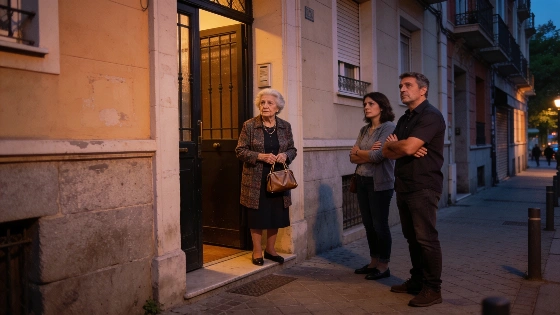
After five days of uncertainty, Maricarmen may soon return to her Retiro apartment. The property owner and city housing authorities have struck a deal, but the final decision now rests with the 87 year old tenant herself.
Late Monday, after four tense hours at the table, Urbagestión agreed to let 87 year old Maricarmen go back to her Retiro apartment. She lived there for seventy years. The talks included the property owner, Maricarmen’s legal and family team, and the Empresa Municipal de Vivienda y Suelo (EMVS), Madrid’s city housing company.
The deal, confirmed by Ana de Miguel, CEO of EMVS, would give Maricarmen a new rental contract. But nothing is final yet. Maricarmen must approve the terms herself before anything is signed. Until then, her future is still up in the air.
Maricarmen was forcibly evicted from her home on September 23, 2026, despite protests and attempts to halt the process, making her case one of the most high-profile examples of Spain's housing crisis.
Public pressure and media attention forced Urbagestión to rethink its stance. Last Friday, the company tried to transfer the apartment to EMVS so Maricarmen could rent it at a lower rate through the city’s Reviva plan. EMVS turned down the offer. The reason: the apartment still had a mortgage, and Reviva only accepts properties free of debt. The program also uses a waiting list, not direct assignment.
With Reviva out, city officials stepped in. They mediated directly between Urbagestión and Maricarmen’s team. The new deal came through the city’s Rental Intermediation Service. This service gives landlords and tenants extra guarantees, like insurance against missed payments and a rule that tenants pay no more than 40% of their net income on rent. The details of Maricarmen’s new lease have not been made public.
According to BBC News Mundo, Urbagestión acquired the apartment in 2018 and soon sought to raise the rent from 500 euros to as much as 2,650 euros per month, later offering 1,650 euros—amounts far above Maricarmen's pension of around 1,350–1,400 euros. The legal dispute lasted several years and reached Spain's Supreme Court, which ultimately sided with the company, paving the way for the eviction.
Maricarmen’s story is one of long stability, then sudden loss. She lived in the Retiro flat before Urbagestión bought it in 2018. The price was called “irrisorio” for the area, because she was a protected tenant. Her pension is about 1,400 euros. She never missed a rent payment. The old rent was around 500 euros a month. In 2020, she was told her time was up. Urbagestión said the contract had already been subrogated twice. The company refused every offer—whether from the city, private buyers, or even cultural figures—to pay the difference or buy the flat. At one point, they demanded 1,600 euros in rent. That was far more than Maricarmen could pay.
The Sindicato de Inquilinas, which joined the talks, says their protest camp at Puerta del Sol will stay. They insist Maricarmen’s case is just one part of a much bigger housing crisis. For them, this is not just about one tenant.
Madrid now waits for Maricarmen’s answer. Her case has become a symbol of how far tenant protections go—and where they stop—in the city’s housing market. Maricarmen’s lawyer, Duro, pointed out that it took Urbagestión six years to even sit down and negotiate. That says a lot about the power landlords hold in Spain’s rental disputes.
Nothing is settled yet. But both the property owner and city officials have shown rare flexibility. Usually, this sector is locked down by strict contracts and legal roadblocks. This case, like the reported earlier story of public figures stepping up for family, shows how one case can push institutions to act. The real question: will this deal set a new standard, or will it stay a one-off in Madrid’s ongoing housing fight?