El Raval in Barcelona is now among the city’s most heat-vulnerable areas. High population density, cramped housing, and few green spaces leave many residents with no escape from rising temperatures. Calls for better rooftop access and more climate shelters grow.
Barcelona’s El Raval district is emerging as one of the city’s most heat-exposed neighborhoods, with residents facing relentless high temperatures and limited options for relief. The combination of dense population, narrow streets, and a shortage of green spaces has created a situation where many families, especially those in small, overcrowded apartments, find it nearly impossible to stay indoors during heatwaves.
For Ayla Tribu, a mother of five-year-old twins living on Joaquín Costa street, the summer months mean daily searches for cooler spots outside her home. With no air conditioning and malfunctioning fans in her 40-square-meter apartment, which she shares with five others, Ayla often brings her children to the plaza de les Caramelles, one of the few places nearby where they can cool off in public showers. She says staying inside is simply not an option when temperatures soar.
Research from the Universitat Politècnica de Catalunya (UPC), led by architect Helena Coch Roura, highlights El Raval’s vulnerability. The study found that one in four Barcelona households is at risk during heatwaves, with El Raval ranking among the worst due to its urban density, poor natural ventilation, and lack of access to climate shelters. According to Coch, the district’s urban layout—characterized by subdivided apartments and limited cross-ventilation—exacerbates the problem, making it harder for buildings to release heat at night.
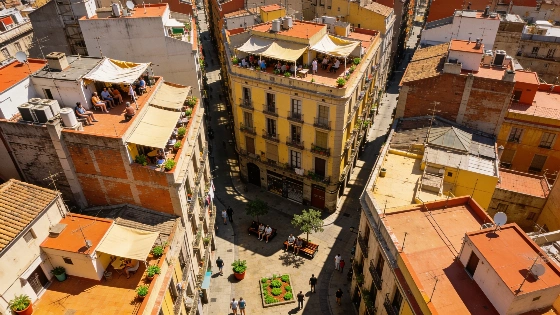
One proposed solution is to make better use of rooftops, a practice common in North African cities where open terraces provide natural ventilation after sunset. In El Raval, however, many residents report that rooftop access is restricted or permanently closed, limiting their ability to escape the heat. Coch suggests that opening these spaces could offer a practical, community-based way to cope with nighttime temperatures, but acknowledges that implementation remains inconsistent.
During the day, the city promotes climate shelters as a key resource, but many locals either do not use them or find them unsuitable. Ayla notes that while she sometimes passes through the MACBA museum, she feels uncomfortable staying there with young children. The issue of shelter accessibility and awareness has reached local politics, with residents urging the city council to extend opening hours and improve communication about available spaces. Deputy mayor Albert Batlle responded that while the city cannot provide a shelter or fan on every corner, there are numerous public and private spaces where people can find some respite. He recalled how, decades ago, his own relatives would spend summers in department stores like El Corte Inglés to escape the heat.
El Raval’s situation is not unique in Spain, as other urban centers also grapple with the effects of rising temperatures and limited infrastructure for heat relief. The challenge of adapting older, densely built neighborhoods to modern climate realities is a growing concern for city planners and residents alike. In a related context, the issue of social inequality and access to essential services has been highlighted in other parts of Catalonia, as seen in recent reports on education disparities. For example, a recent analysis of Catalonia’s education system pointed to persistent gaps that mirror the challenges faced by vulnerable communities like those in El Raval.
Barcelona’s experience underscores the urgent need for practical, scalable solutions to urban heat. As climate change drives more frequent and intense heatwaves, the city’s most densely populated districts will remain at the forefront of adaptation efforts. Ensuring access to cooling spaces, improving building ventilation, and rethinking the use of communal rooftops are now central to the debate on how to protect residents’ health and quality of life in the years ahead.
According to municipal data, El Raval’s population density—over 43,000 inhabitants per square kilometer—is nearly triple the city average. The district’s housing stock, much of it subdivided into smaller units, further limits natural airflow. While Barcelona has expanded its network of climate shelters in recent years, awareness and accessibility remain uneven, particularly among families with young children or those living in overcrowded conditions. The city’s experience reflects broader trends across southern Europe, where urban adaptation to extreme heat is becoming a critical public health and social equity issue.