A major wildfire has destroyed 15% of Valencia’s Devesa natural park. Experts estimate it will take two decades for the area to recover. The incident has sparked criticism of local prevention policies.
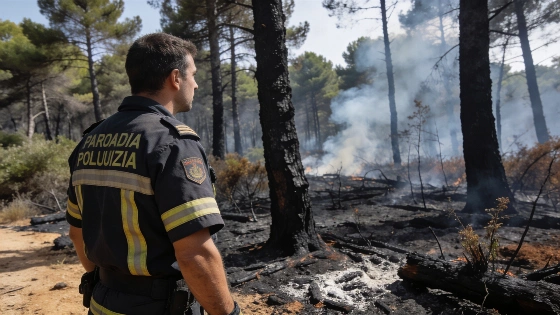
A wildfire in the Devesa of El Saler, just eight kilometers from central Valencia, has become one of the most destructive in the area’s history. The blaze, which broke out last Thursday and is suspected to be intentional, has already consumed 36 hectares—about 15% of the 800-hectare Mediterranean forest. This makes it the worst incident since 1986, when 40 hectares were lost in a single event.
Experts warn that the environmental impact will be long-lasting. According to Eduardo Rojas, a forestry engineer and professor at the Universitat Politècnica de València (UPV), the affected area will need around 20 years to return to a state resembling its previous condition. Rojas notes that while no species have been lost, the regrowth of pines to a height of four or five meters will take decades. He stresses that the damage is not irreversible, but highlights the urgent need for proactive management and prevention in natural parks.
The fire has reignited debate over the effectiveness of local prevention strategies. Opposition groups in Valencia’s city council have criticized the current government, led by PP and Vox, for what they describe as insufficient preventive measures. Rojas points out that the park’s unique management structure—shared between the Generalitat and the city council—has not benefited the Devesa. He also recalls past urban development pressures, including major projects in the 1960s that threatened to replace forest with hotels and apartments, though these were halted in 1979. However, some residential buildings remain, and Rojas advocates for their protection.
Another forestry expert, Ferran Dalmau Rovira, agrees with the 20-year recovery estimate. He suggests that the initial response to the fire may have been complicated by the need to protect people and property, especially given the unnatural accumulation of biomass in the park. Dalmau, who works with the city on installing water cannons near inhabited areas, believes that emergency services must adapt to the new scale and frequency of such disasters.
As the fire continues, opposition parties Compromís and PSPV-PSOE have demanded explanations from the city government regarding the response and management of the incident. Compromís spokesperson Papi Robles describes the current state of the Devesa and l’Albufera as the worst in memory, while socialist councillor Elisa Valía claims the area is completely neglected. José Gosálbez, the Vox councillor responsible for Devesa-Albufera, previously announced a pilot project in 2025 to apply fire retardants in inhabited zones, but municipal sources confirm that the product was not acquired this year. Vox argues that after the pilot, responsibility for further purchases shifted to the fire service, which is managed by the PP. Gosálbez also states that vegetation pruning has increased, especially near residential areas.
In 2023, another fire destroyed 16 hectares in the same forest. At that time, Gosálbez blamed the previous city administration for excessive vegetation, calling it a result of “ecoesnobismo.” Now, with more than double the area affected, the debate over forest management and prevention has intensified.
This latest incident comes amid a period of heightened fire risk in the region. Earlier, Valencia faced a red alert for extreme heat, with authorities warning of increased wildfire danger as temperatures soared to record levels. The combination of high temperatures, accumulated biomass, and complex management continues to challenge efforts to protect one of Valencia’s most important green spaces.
The Devesa of El Saler is a rare example of Mediterranean coastal forest, featuring dunes, dense pine groves, and native shrubs. Its proximity to both the Albufera lagoon and the Mediterranean Sea makes it a vital ecological and recreational resource for Valencia. The current fire highlights the ongoing vulnerability of such environments to both natural and human threats, and underscores the need for coordinated, long-term strategies to ensure their survival.