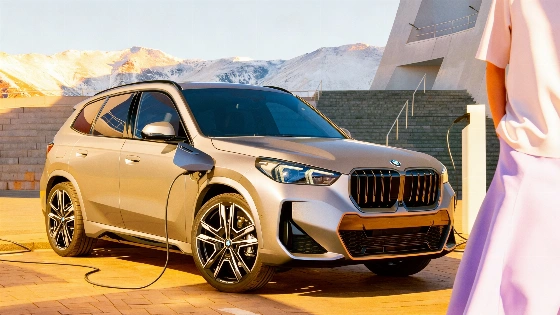
BMW Abandons Hybrids: Why the Brand Is Changing Strategy in Europe. BMW is rethinking its bet on hybrids: the brand is ready to drop PHEVs if customers don't start charging them. Why is the German automaker shifting course, and how is this linked to European regulations and the real behaviors of drivers? We take a closer look.
BMW is preparing for one of the most notable turnarounds in its history: the German auto giant is seriously considering abandoning plug-in hybrids (PHEV) in favor of fully electric vehicles. The reason is not only the tightening of European environmental regulations, but also the unexpected behavior of buyers themselves, who, as it turns out, are in no hurry to use hybrids as intended.
According to Nicolas Peter, member of the BMW Supervisory Board, if the company has to part with any category of models, PHEVs will be the first to go. As noted by the German publication Die Zeit, the brand's management openly admits: most hybrid owners prefer to fill up the tank rather than plug the car into a socket. As a result, these vehicles often emit nearly as many pollutants as conventional petrol or diesel cars.
Plug-in hybrids were long considered a compromise between traditional engines and electric vehicles. European governments actively subsidized their purchase, and owners received benefits and environmental stickers. However, as Peter points out, the system proved vulnerable: the state encourages the purchase of 'clean' cars, but does not control whether they are used in electric mode. As a result, many drivers simply enjoy the advantages without changing their habits.
The situation is further complicated by the fact that the current WLTP certification system allows manufacturers to showcase understated emissions figures for PHEVs — tests are conducted with a fully charged battery, meaning most of the route is covered in electric mode. In real life, if the driver doesn't charge the car, emissions are much higher. The European Union is now preparing a reform of the calculation methodology to bring the figures closer to reality. This could make hybrids less attractive to automakers, who will have to invest in new technologies or switch entirely to electric vehicles.
BMW is already seeing record sales of electric cars, which are beginning to surpass even its traditional combustion engine models. For example, by year's end, the BMW i4 outpaced the legendary M3 in popularity. Despite this, the company does not plan to fully abandon gasoline and diesel vehicles until the end of their life cycles, but the emphasis on PHEVs is clearly losing its point.
BMW's strategy reassessment reflects a broader market trend: more and more automakers are revising their plans to produce hybrids, focusing on real driver habits and new regulatory requirements. For comparison, other brands are also adjusting their lineups — as recently happened with the Citroën C4 and Seat León, which are responding differently to the growth in electric car popularity and stricter standards. You can read more about how approaches to compact models are changing in the article about the battle between the Citroën C4 and Seat León.
In the coming years, the fate of hybrids in Europe will depend not only on decisions made by automakers, but also on how quickly certification and subsidy rules change. For consumers, this means that familiar savings and benefit programs could disappear, and the choice between an electric car and a traditional internal combustion engine may become much more clear-cut.