Endesa has installed the first of 23 next-generation electrical transformers in Seville’s Polígono Sur, aiming to stabilize power supply in neighborhoods hit by illegal hookups and marijuana cultivation. The project marks a major step in tackling chronic outages and network damage.
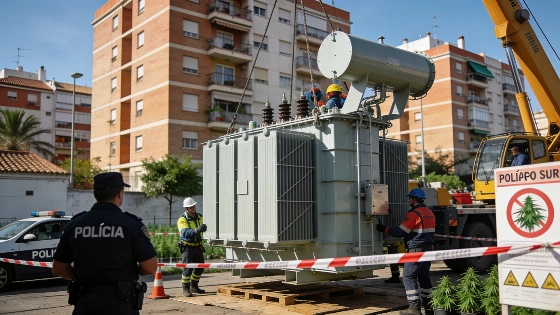
A massive new electrical transformer now stands on La Celestina street in the heart of Tres Mil Viviendas, one of Seville’s most troubled districts for power fraud and blackouts. Installed by Endesa as part of a €4.6 million agreement with the city council, this is the first of 23 planned centers designed to reinforce the city’s grid where illegal connections and marijuana plantations have pushed the system to its limits.
The choice of Polígono Sur is deliberate. According to Endesa, this area suffers from some of the highest rates of electricity theft in Spain, with fraud levels reaching 73%. Much of this is linked to clandestine cannabis grows inside residential buildings, which not only drain the network but also leave law-abiding residents facing frequent outages and voltage drops.
The new transformer station houses two 630 kVA machines and weighs over 25 tons, requiring specialized cranes for installation. In the coming weeks, technicians will lay more than 300 meters of medium-voltage cable to connect the facility to the wider grid. Endesa says it has already invested over €3.5 million in Polígono Sur since 2020, doubling capacity at nine transformer centers, installing more than 30 kilometers of new lines, and opening another center last year.
Targeting High-Fraud Zones
The broader plan, agreed with the Seville city council, will see 23 new transformer centers installed by 2026. Ten of these will be placed in neighborhoods with the most severe fraud: three in Palmete, three in Torreblanca, two in Padre Pío, and two more in Polígono Sur. The remaining centers will reinforce supply in other parts of the city, including Polígono Carretera Amarilla, Polígono Store, Nervión, San Laureano, El Juncal, Santa Teresa, and the historic center. The project also includes over 12.6 kilometers of new medium-voltage cable and 67.2 kilometers of low-voltage lines.
Once completed, the new infrastructure will provide a total capacity of 26,640 kVAs—enough, according to city officials, to supply around 13,200 new customers or the equivalent of nine hospitals the size of Virgen Macarena.
Marijuana Grows Strain the Grid
Both Endesa and the city council point to illegal marijuana cultivation as a key factor behind the chronic strain on Seville’s electrical network. A single grow operation can consume as much electricity as 80 homes running non-stop, year-round. While new transformer centers can temporarily relieve pressure, Endesa warns that simply adding capacity risks attracting more illegal connections unless enforcement also improves.
To address this, Endesa is working with national police and security forces to dismantle illegal grows and pursue fraud cases. In the first five months of 2026 alone, the company opened an average of one new fraud investigation per week in Seville linked to marijuana plantations.
Persistent Challenges Ahead
While the new infrastructure offers hope for more stable power in affected neighborhoods, both Endesa and local authorities acknowledge that technical upgrades alone cannot solve the underlying problem. Without sustained action against illegal connections and energy theft, the risk of recurring outages remains high. The situation in Tres Mil Viviendas and similar districts highlights the complex intersection of social challenges, criminal activity, and essential services in Spain’s urban landscape.