The Vuelta a España 2026 reaches its most punishing stage near Granada. Riders confront 4,890 meters of elevation and five relentless climbs. The new Collado del Alguacil ascent could decide the race outcome.
Enric Mas is about to face the toughest test of his career as the Vuelta a España 2026 heads into its hardest stage. The penultimate day, set in the mountains around Granada, packs in 4,890 meters of climbing and five major ascents. The final climb, Collado del Alguacil, is making its debut and could decide the race.
The Collado del Alguacil is new to the Vuelta but well known to local cyclists. Its southern side, first explored by the late Xavi Tondo, is infamous for steep, unrelenting gradients and no real breaks. Many riders have trained here because of its proximity to Sierra Nevada, but that familiarity offers little comfort when the heat rises and the road rarely eases below double digits.
The Collado del Alguacil is making its debut as a summit finish in the Vuelta a España, having never before featured as a stage finale in the race's history.
This year, Granada is at the heart of the action. The stage starts in La Calahorra and finishes atop Collado del Alguacil, bringing together local pride and a brutal sporting challenge. Luis Ángel Maté, who retired in 2024 and knows these roads well, calls it "one of the hardest stages in Vuelta history." He points out that replacing the washed-out Hazallanas climb with El Duque has only made things harder, describing El Duque as "the crown jewel" for local cycling fans.
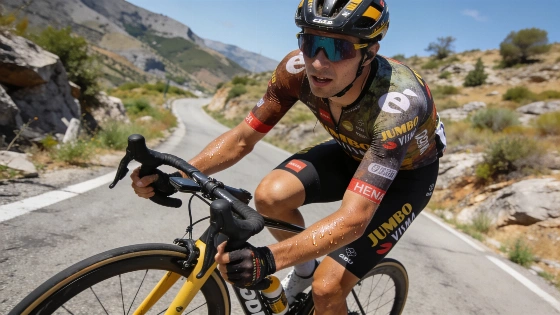
Riders will also have to tackle El Purche twice before the final showdown. The combination of steep gradients and expected high temperatures means even those with a solid lead are at risk of cracking. Mas starts the day with a 1:37 advantage over Primoz Roglic, but as Maté warns, no lead feels safe on a stage like this.
According to several leading cycling publications, the 20th stage is widely described as the 'queen stage' of the 2026 Vuelta, with five categorized climbs and a total elevation gain estimated between 4,890 and 5,120 meters, depending on the calculation method. The route's difficulty is further amplified by the expected Andalusian heat and the inclusion of both El Purche and El Duque climbs before the final ascent.
— Multiple cycling media
Tadej Pogacar is missing from the start after an accident two weeks ago, removing a major rival but not making the day any more predictable. Most of the peloton has experience in the Sierra Nevada, which might help with pacing, but the sheer difficulty of the route leaves little margin for error. As reported earlier, Mas held his lead through the Jerez time trial, but today's mountain stage is a different challenge altogether.
What makes this stage unique isn't just the numbers—almost 5,000 meters of climbing over 187 kilometers—but the mental strain. The Collado del Alguacil's constant steepness, the heat radiating off the Andalusian roads, and the knowledge that a single bad moment could undo years of work all combine to make this a true test for the contenders. The decision to reroute via El Duque after winter storms has only raised the bar for difficulty.
With the final day in Granada expected to be mostly ceremonial, today's stage is the last real fight. The result will likely decide the winner and set a new standard for what riders can endure in a Grand Tour. The Collado del Alguacil is now the ultimate test—one that demands not just strong legs, but nerve and resilience. The organizers have raised the stakes, and the peloton has to respond with everything they've got left.