Estrella Morente nearly joined the cast of La bola negra. She shares how her roots in Granada, her family's influence, and her tributes to Lorca and Falla shape her music and life.
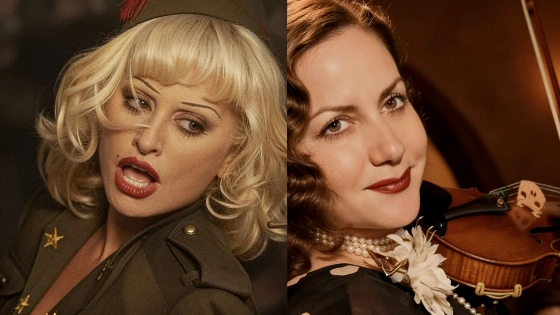
Estrella Morente almost joined the cast of La bola negra. She auditioned for the role that went to Penélope Cruz. Her tour schedule got in the way. She told El Confidencial and El Español that she "did the casting" but work commitments forced her to step back. This is a common struggle for artists. Sometimes, one project means missing another.
But Morente's ties to Lorca and Manuel de Falla run much deeper than a film role. She grew up in Granada. As a child, she visited two places again and again: Manuel de Falla's house, filled with his personal things, and the Huerta de San Vicente, Lorca's old summer home. Back then, it was just a wild field. Her father, Enrique Morente, brought her there to play. He wanted her to feel the weight of these artists. It shaped her. "I have a brutal respect and veneration for those two artists. Just as I do for my father," she says.
The official cast of La bola negra, as promoted by Netflix and industry publications, includes Guitarricadelafuente, Miguel Bernardeau, Carlos González, Penélope Cruz, and Glenn Close, with a theatrical release planned for the US and Canada in fall 2026.
Now, Morente is on the road with Lorca, Falla y Estrella Morente: el fuego del alma española. This project brings together Falla's music and Lorca's poetry. The tour marks Falla's 150th birthday and the 100 years since the Generation of '27, with Lorca at its heart. Morente revives the 1914 version of El amor brujo, using texts by María Lejárraga. For years, Lejárraga's work was hidden behind her husband's name. Morente says, "I won’t be the first or last to give her visibility, but I am one of her admirers. This work is something else with her texts. I’ve realized my whole career has been a tribute to women. I was born with that urge to champion the female figure."
For Morente, Falla's music is Spain itself. "If I could choose, I’d make any piece from El amor brujo the Spanish anthem. If anything is Spain, it’s all there. This country is magical and Falla knew how to express its greatness, its color, its gypsy spirit and sorcery, its hunger and its pain." She says her own art comes from the "sorcery of Granada." Poets, painters, and composers have always come to this city. She even got married between the Manuel de Falla auditorium and his house. That was no accident. It tied her life to her roots.
Morente's current tour features confirmed dates in Seville, Burgos, Madrid, Granada, Valladolid, and Zaragoza in late 2026 and early 2027, reflecting a demanding schedule that made film participation difficult. The tour is also highlighted as a major part of Spain's autumn 2026 musical agenda, according to national and regional press coverage.
Morente never wavers in her respect for Lorca. She remembers her father singing Lorca's poems. That led to the legendary album Omega. "The more Lorca is celebrated, the better the world will be," she says. She missed her chance to appear in La bola negra, but she trusts the film will honor Lorca. "Federico should be president, director, everything for Spain. His sensitivity is needed in this corrupt and convulsed world. Not even his murder could silence him—his voice is louder than ever."
The Morente name is both a gift and a test. "The Morente surname is more wings than weight. Some have scrutinized me for coming from one of Spain’s greatest cultural creators. Being Enrique Morente’s daughter brings moral, artistic, and humanistic obligations. But if you follow the path of sacrifice and work he set, everything goes well. He taught us to listen to constructive criticism and respect the great masters, but to ignore the fools."
The family legacy lives on. Her son Curro is now the third Morente in music. Her daughter Estrella studies design. "It excites me to see my children still honoring the figures their grandfather championed. They’re discreet, focused on their studies and art. Curro has become an incredible musician, as Eric Jiménez told me. What I like most is how discreet he is during rehearsals. I’ll defend young people, even if I’ve complained about them before. They’re out in Madrid right now protesting for housing. We need to support them—they’re having a hard time. Enough with saying they only care about their phones. Some do, but many don’t. We should make it easier for them to access concerts, museums, conservatories, and to have a home with their own salary."
Flamenco lost two giants in recent months: Pepe Habichuela and Ricardo Pachón. Both were close to her father. "With Pepe, I lose a part of my life, my career, my childhood. I carry him in my DNA. With Morente, Paco de Lucía, and Camarón, they changed flamenco. Things got a little better with them, and their legacy remains. I’m proud to be Morente’s daughter and part of this family."
Morente is blunt about her own legacy. "It gives me vertigo to think about what will remain of me. I hope I’m remembered as a good person and mother, but seeing the world as it is… Even in life, people invent things to create rumors. We’re in the age of rumor, with little respect for the dead. Before, when someone died, everything was good. Now, we use artificial intelligence to invent versions about Lorca’s death. I don’t know where we’re headed, but let’s behave well while we’re here and can manage our story."
For Morente, risk is part of art. "Without risk, there’s no emotion, and without emotion, there’s no art." Her career is built on respect for the past and a drive to honor those who were overlooked. She proves that flamenco’s future needs both tradition and boldness. In Spain, where cultural memory is still a struggle, Morente’s voice connects generations. She stands between genres, between the living and the legends. Her story is not finished.