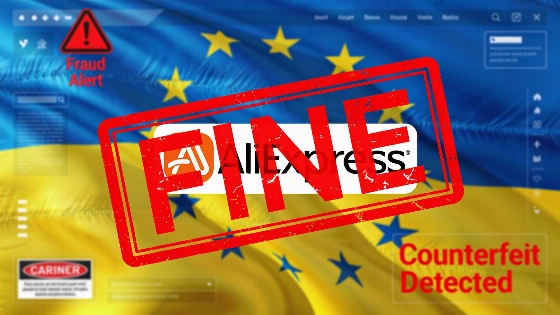
The European Commission has imposed a €550 million fine on AliExpress. The platform failed to prevent the sale of illegal and dangerous products. This is the largest penalty under the EU’s digital services rules so far.
The European Commission has handed AliExpress a record €550 million fine, citing the company’s inadequate oversight of illegal, dangerous, and counterfeit goods sold through its online marketplace. The decision marks the largest penalty issued under the EU’s Digital Services Act (DSA) to date, nearly tripling the €200 million fine imposed on Temu earlier this year.
According to the Commission, AliExpress, a subsidiary of the Alibaba Group, failed to properly assess and mitigate the risks associated with the distribution of prohibited products. Investigators found that the company did not allocate enough staff to monitor listings, with some employees reportedly given as little as 10 to 20 seconds to review each product for potential hazards. The Commission criticized AliExpress for underestimating the imbalance between the number of human moderators and the volume of content requiring review.
Further scrutiny revealed that AliExpress’s recommendation and advertising algorithms contributed to the wider spread of illegal goods. The company’s risk assessment methods were also deemed insufficient, as they did not effectively measure whether moderation systems were preventing the sale of banned items. As a result, a range of illegal products—including counterfeit goods, unsafe toys, and hazardous cosmetics—remained available on the platform for weeks, even after being flagged.
Another key issue was AliExpress’s failure to enforce its own sanctions policy against merchants selling illegal items. The Commission’s investigation, launched in March 2024, concluded that the company’s response to these risks was inadequate. Of the total fine, €110 million was attributed to poor risk assessment, while €440 million was linked to insufficient risk mitigation.
The penalty covers AliExpress’s activities up to June 2025, when the Commission formally accused the company of breaching the DSA. The EU’s digital services rules, introduced in 2022 and enforced from 2023, require major online platforms—those with over 450 million users—to conduct annual risk assessments and take effective action to address illegal content and products. The logic behind these regulations is to impose stricter obligations on large platforms due to their greater potential to spread harmful material.
AliExpress has expressed strong disagreement with the Commission’s decision and the size of the fine. In a statement, the company said it had worked constructively with EU authorities, made significant improvements, and taken voluntary steps to meet DSA requirements. AliExpress is currently reviewing the ruling and considering its options.
As part of the enforcement process, the Commission has ordered AliExpress to submit a corrective action plan by October 20. This approach mirrors recent cases involving other major platforms, such as X and Temu, which have also been required to present detailed plans to address regulatory concerns. The DSA allows for fines of up to 6% of a company’s global annual revenue, but the current penalty represents less than 1% of Alibaba Group’s reported €120 billion turnover in 2025.
The EU’s push for stricter digital regulation has drawn criticism from some quarters, particularly from US-based companies, who argue that the rules are protectionist and threaten free expression. However, the Commission maintains that the measures are necessary to protect consumers and ensure accountability among the world’s largest online platforms. The combined fines for Temu and AliExpress now total €750 million, far exceeding the €120 million penalty previously levied against X. For further context on how the EU’s regulatory approach is affecting other sectors, see this analysis of regional funding tensions in Spain: debate over regional funding fairness.
In summary, the AliExpress case underscores the EU’s determination to enforce its digital services rules and signals that major online marketplaces must invest more heavily in risk management and compliance. The outcome is likely to influence how other global platforms approach their operations in Europe, especially as regulatory scrutiny continues to intensify.