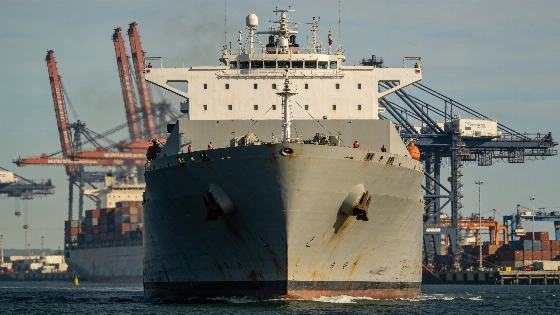
The Federal Maritime Commission has proposed a $200,000 charge each time a Spanish-flagged ship enters a US port. It is also weighing import restrictions that could cover five categories of Spanish goods, including oils and cosmetics.
At least three US-flagged vessels were turned away from Algeciras in November 2024. That dispute now sits behind a proposed $200,000 charge on Spanish ships entering US ports.
On October 14, 2026, the US Federal Maritime Commission, an independent agency that regulates international ocean shipping, proposed the charge for every voyage by a Spanish-flagged vessel entering a US port. It also proposed possible restrictions on five categories of Spanish imports. Neither measure has been adopted. The FMC is seeking public comments and will give Spain a hearing before making a final decision.
The charge would apply regardless of the cargo aboard a Spanish-flagged ship. It would be levied per voyage, not once per vessel, so an operator making repeated trips could rack up the charge each time the ship enters a US port. The ship’s flag, rather than the cargo’s origin, determines whether the fee applies. Spanish goods carried on ships registered in other countries would not face the vessel charge simply because they came from Spain.
The separate import proposal names perfumery and cosmetics, along with oils and fats. It also covers ceramics and stone articles, plus sugar and confectionery. The oils category could include Spanish olive oil, but the commission has not identified the specific products or said whether restrictions would mean bans, quantity limits or other trade conditions.
The dispute began after Spain refused entry to certain ships linked to cargo bound for Israel. Some of the vessels turned away at Algeciras were connected to the US Maritime Administration’s Maritime Security Program, which keeps commercial ships available for strategic and national-security needs.
In December 2024, the FMC opened a formal investigation into whether Spain had imposed general or special unfavourable conditions on US foreign-trade shipping. The commission said its findings included evidence that Spain had denied US-flagged vessels access to its ports.
The FMC argues that those decisions damaged the efficiency and reliability of international shipping. It says they also hurt US export capacity and reduced the availability of a merchant fleet for commercial and security needs. The investigation found that US vessels had been diverted to other ports and had largely abandoned calls in Spain.
That is the regulator’s trade-law case. Spain has tied the port restrictions to its foreign policy, while the FMC has focused its inquiry on the effects for US shipping. During an earlier stage, Spain’s embassy in Washington defended the country’s right to determine its diplomatic relations.
The FMC had previously considered several responses. They included cargo restrictions and a ban on Spanish ships entering US ports. The agency also considered financial penalties. At that stage, it cited a maximum of up to $2 million per voyage under a legal limit adjusted for inflation. That figure was not an approved fine. The current proposal instead sets out a $200,000 charge per voyage and possible import restrictions.
If import measures are adopted, the effects could reach beyond shipping companies. Exporters would also be exposed, alongside other state economic interests, including strategic company stakes covered in an earlier report.
The Spanish government says it is analysing the FMC’s findings and will defend Spain’s interests and those of its companies in coordination with the European Commission and EU member states. It says it wants to avoid an escalation affecting Spanish businesses and trade relations with the United States. The FMC is now inviting public comments and will offer the Spanish government a hearing before deciding what action to take.