Spain's state holds shares worth around €50 billion. Seven of the ten listed companies belong to the Ibex 35. The election could change Madrid's role in strategic businesses.
On 29 November, Spanish voters will elect a new government while the state holds shares in ten listed companies. Seven belong to the Ibex 35, and their combined market capitalisation exceeds €342.5 billion. The state-held shares are worth around €50 billion, spanning energy, defence, transport and banking. The Government of Spain has formally confirmed the vote.
The official electoral calendar sets 13 November as the campaign's start and 23 December as the date for the new Parliament's first sitting.
Control is uneven. The state has decisive voting power in Aena and a major position in CaixaBank. Its influence is also large at Indra, Redeia, Enagás and Telefónica. Smaller holdings leave Madrid with less say over board decisions at other companies.
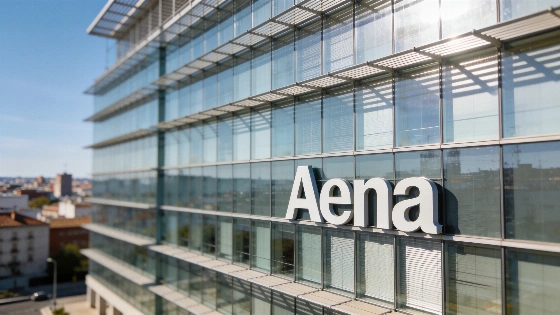
Aena is the largest asset. Enaire owns 51% of the airport operator. Aena shares closed at €25.84, putting its market value at around €38.8 billion.
The public stake was worth approximately €19.768 billion, about 40% of the state's total portfolio in listed companies. It also generated €834 million in dividends from 2025 results.
The government can decide who leads Aena.
CaixaBank is the next-largest holding. BFA Tenedores owns 18.1%, a stake valued at €15.606 billion based on a closing share price of €12.36.
BFA Tenedores was previously wholly owned by the Frob. Following the change approved by the Council of Ministers in late July, it will become a company attached directly to the Ministry of Economy. Its role in exercising shareholder rights will remain unchanged.
The dissolution of both chambers rests on Article 115 of the Spanish Constitution and Article 42.1 of the Organic Law on the Electoral Regime. The royal decree also sets the allocation of seats among constituencies, establishing the legal structure for the new Congress. The Government of Spain provided these details.
The state remains formally required to sell its CaixaBank holding by December 2027. The deadline has been postponed several times, most recently in February 2025. The government cited more efficient use of public resources and the prospect of recovering more of the money invested.
Sepi manages most of the remaining positions. Its largest is a 4.12% stake in Airbus, worth more than €6.1 billion at a share price of €188.
Indra is next. Sepi owns 28%, after the government bought an additional 10% in 2022 for nearly €174 million. The package is now worth about €1.05 billion, roughly €880 million more than its purchase price.
Telefónica is a different case. After almost three decades outside the company's capital, the state returned, paying around €2.285 billion for 10%.
The stake is now valued at €1.917 billion. Share performance has cut its value by €368 million. The purchase followed the unexpected entry of Saudi company STC and later proved decisive in Marc Murtra's appointment as president.
Energy and transport give the state more use. Madrid owns 20% of Redeia, worth close to €1.6 billion, making it the company's largest shareholder.
Sepi also holds 5% of Enagás, valued at around €200 million. Despite the smaller stake, it remains the company's principal shareholder. In transport, the state controls 2.52% of IAG, worth about €600 million, and 7.8% of Talgo following an investment of €75 million last year.
The Talgo holding is now worth around €25 million.
The portfolio also includes 10.36% of Ebro Foods, valued at €289 million. State influence is strongest when a stake provides control or makes Madrid the leading shareholder. Aena, Redeia, Enagás and Indra are clear examples.
At CaixaBank, Ebro Foods, Talgo, Airbus and IAG, the public stake carries less weight in governance.
Since Sánchez entered government, Madrid has returned to Telefónica, increased its stake in Indra and entered Talgo. The election could determine whether the state expands or reduces its listed-company portfolio, and how it uses those holdings. They could remain financial assets or become tools of influence in strategic sectors. The largest stakes are in infrastructure and finance. The €50 billion portfolio gives the next government a clear measure of its economic direction.
Sánchez said he made the decision after notifying the head of state and convening an extraordinary meeting of the Council of Ministers. He presented the vote as a chance to determine the country's future political course.