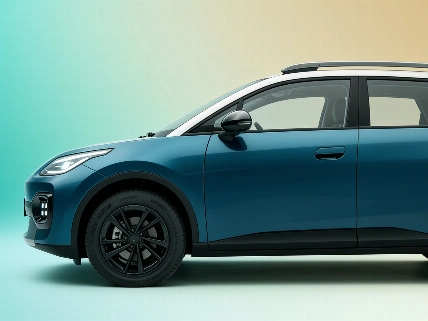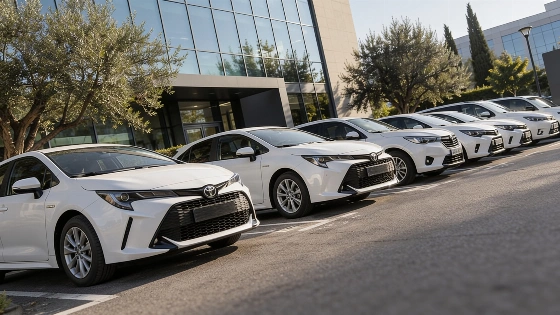
A leaked European Commission document has stirred concern over the future of VAT deductions for company cars in Spain. Despite the rumors, no law has been passed, and the proposal is still under discussion, leaving businesses uncertain about what comes next.
Spanish companies that rely on combustion vehicles are facing confusion after a European Commission document hinted at possible future limits on VAT deductions for corporate fleets. Despite the alarm, nothing has changed yet: there is no new law, and the idea remains a proposal under discussion.
The concern started when Communication COM(2025) 96, published by the Commission on March 5, 2025, began circulating in the industry. The document, titled “Decarbonizing corporate fleets,” is not a directive or regulation. It sets out a political direction and lists measures that member states might consider while Brussels works on a broader legislative proposal.
In September 2026, the European Commission officially launched a public consultation on VAT rules, including the treatment of passenger cars used in business, with responses accepted until November 4, 2026.
The debate centers on the fact that nearly 60% of new passenger cars registered in the EU are bought by companies. For vans, buses, and trucks, the corporate share is even higher. These vehicles rack up more kilometers and enter the used market sooner, making them a key target for electrification. The Commission’s reasoning is straightforward: if companies are encouraged to buy electric vehicles, the transition speeds up, and those cars eventually become more affordable for private buyers.
Spain already offers accelerated depreciation for electric vehicles in corporate tax, making it financially attractive for companies to go electric. The same logic applies to VAT: if electric cars are more tax-efficient for businesses, the shift to electrification happens faster. This approach is more effective than trying to convince millions of individual buyers one at a time.
The main controversy comes from the Commission’s mention of a possible “progressive elimination” of VAT deductions for conventional vehicles as part of a future “green VAT” plan. The document does not set a start date, define which vehicles would be affected, or clarify how plug-in hybrids would be treated. Claims that VAT deductions will immediately drop to 0% for combustion cars and 100% for electric ones are unfounded. No specific percentages or timelines have been set.
Current rules on VAT deductions for company cars already vary significantly across EU countries. For example, Belgium has implemented strict limits on deductions for vehicles with CO2 emissions, while offering more favorable treatment for electric cars. This reflects a broader EU trend toward using tax policy to encourage cleaner corporate fleets.
For Spanish fleets, the bigger issue is not an immediate tax hike but the shrinking window to buy combustion vehicles without extra fiscal penalties. Spain lags behind its neighbors: only 7.1% of corporate registrations are electric, compared to 24.7% in Portugal and 54.2% in Belgium, where tax reforms are already in place. The message from Brussels is clear—change is coming, and Spain has yet to respond.
Similar worries have surfaced elsewhere in the Spanish automotive sector, as seen in the recent case of electric cars being blocked from parking garages despite no legal basis for such bans.
According to Google/SpainAuto, the current situation is one of anticipation, not crisis. The Commission’s document signals intent, not immediate action. For now, Spanish companies still have options, but the fiscal environment is shifting. The real test will be how quickly Spain updates its policies to avoid falling further behind in the move to electrify corporate fleets. The direction is set, but the details and timing are still undecided. For businesses, waiting too long to adapt could be costly.