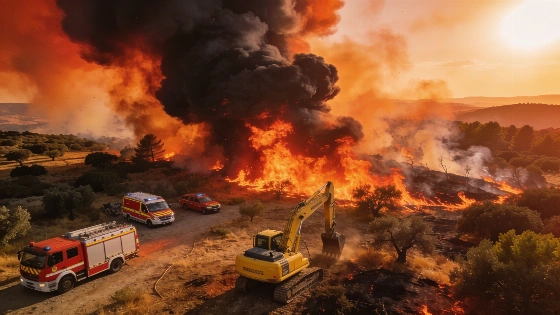
Authorities have identified illegal excavator work as the cause of Spain’s largest recent wildfire. Over 50,000 hectares in Ávila were devastated. The incident has led to criminal charges and renewed scrutiny of fire prevention rules.
Investigators have determined that Spain’s most extensive wildfire in recent history, which ravaged more than 50,000 hectares in Ávila, began when a heavy excavator was used in violation of a strict fire risk ban. The incident unfolded in the municipality of Burgohondo, where the use of such machinery had been expressly forbidden due to extreme summer conditions and the heightened danger of ignition.
The Guardia Civil’s environmental unit, Seprona, traced the fire’s origin to a local landowner known as El Perejil and his employee. Both men are now under investigation, accused of causing the blaze that forced the government to declare a national emergency. El Perejil, who owns the excavator, was briefly detained but released on the orders of the prosecutor’s office as the fire was still spreading. At that stage, the priority for authorities was to contain the flames, which had already consumed 9,000 hectares.
According to sources close to the investigation, the excavator operator claimed the fire started from sparks generated by the vehicle’s chains as it was being removed from the site, not during active work. He stated they were leaving because the Junta de Castilla y León had just imposed a ban on machinery that could trigger fires. However, witness statements contradicted this account, reporting that both men were seen operating the excavator at the time the fire broke out, despite the prohibition.
Evidence collected at the scene, including fresh tire tracks and signs of recent use of the hydraulic hammer, supported the theory that the machinery was in operation when the fire ignited. The excavator was reportedly breaking rock to open a new livestock path through the Sierra de Gredos, connecting Burgohondo with Navarrevisca. The project had been commissioned by a local cattle association and contracted to the Ávila-based company Reforestaciones El Fresno.
Further investigation revealed multiple violations: not only was the work carried out during a period of maximum fire risk, but the excavator lacked the required administrative permits and failed to comply with regulations mandating fire suppression equipment for such machinery. The focus of the inquiry has shifted to El Perejil, who allegedly instructed his employee to continue the work despite the ban. Both men face charges of forest fire and environmental crimes, aggravated by the proximity to inhabited areas and the severe impact on natural ecosystems.
This disaster follows a series of devastating wildfires across Spain in recent years, highlighting ongoing challenges in enforcing fire prevention measures. In a related tragedy, a fast-moving blaze in Almería led to the deaths of twelve residents after an evacuation route proved fatal, as detailed in our coverage of the Los Gallardos wildfire.
Spain’s wildfire season has grown increasingly severe, with climate conditions and human activity both contributing to the risk. The Ávila case underscores the critical importance of adhering to fire safety regulations, especially during periods of extreme heat and drought. Authorities continue to review protocols and enforcement to prevent similar incidents, as the country faces mounting environmental and economic costs from such disasters. The investigation into the Ávila fire remains ongoing, with legal proceedings expected to set a precedent for future accountability in wildfire prevention.