Small digital outlets can now shape political agendas and public opinion, speakers said at a Madrid forum on 26 October. The second session of the FAPE’s 2026-2027 Foros FAPE cycle, titled “Nuevos nichos de empleo en periodismo y comunicación,” brought media professionals to the Universidad Camilo José Cela’s Campus de Castellana to examine jobs in journalism and communication.
The event looked at what students might face after university as digital platforms reshape the profession and create new roles beyond conventional newsrooms. It was organised by the Federación de Asociaciones de Periodistas de España (FAPE) with the Fundación ”la Caixa”. The Universidad Camilo José Cela (UCJC) took part. Universidad Nebrija and DIRCOM were also involved. The event announcement listed the session from 10:00 to 12:00, with two panels and a livestream on the Periodistas FAPE YouTube channel.
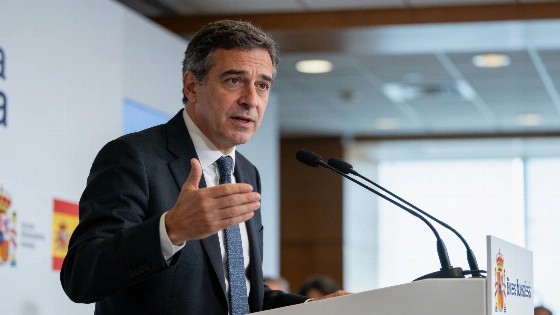
Several speakers described opportunities beyond traditional newsrooms. Manuel Marín, director of Vozpopuli, said technology and the digital market had changed the industry, while new employment niches continued to emerge. Hugo Pereira, director of El Constitucional, said digital outlets could influence public debate and that opportunities to hire communications professionals had multiplied. Europa Press reported that participants also stressed versatility and the need to maintain journalistic ethics as the profession adapts to digital change.
For Kike Andrés Pretel, editor adjunto of POLITICO España, niche media have room to grow because audiences pay for perceived value and seek interpretation, not simply an account of what happened. Carlos Roca of Roca Project joined by videoconference to show how journalism can reach audiences through podcasts and similar platforms.
The spread of digital platforms is also prompting debate beyond newsrooms. A Madrid event scheduled for 28 October will examine problematic social-media use, as reported in this related coverage.
At the second panel, InfoLibre director Virginia P. Alonso argued that strong reporting takes time and careful work, rather than a reflexive response to digital speed. Demócrata chief executive Manuel Bonachela pointed to gaps in young talent. He also cited a need for business training and ambition. He said students entering job interviews should be ready to show initiative and versatility. They should also take an interest in how other media organisations work. The event announcement named Atrevia CEO Global Asunción Soriano as moderator of the second panel.
Víctor Pérez, HuffPost’s audience development and SEO lead, identified podcasting as an area where students could find opportunities. He also pointed to video, artificial intelligence and data analysis. At the FAPE session, speaker Carlos Pérez likewise highlighted podcasts and video as emerging areas of work. He also cited AI and data analysis, and urged students to connect the right story with the right reader on the appropriate platform.
Coverage of artificial intelligence also raises questions about representation. A study reported by Europa Press found that men were the protagonists of 41% of Spanish news coverage about AI, compared with 5% for women. It also found that stories by women journalists included female sources in 25.58% of cases, compared with 18.96% in stories by men.
The Asociación de la Prensa de Madrid’s Informe Anual de la Profesión Periodística 2025, as reported by Magisnet, identified precarious newsroom conditions. It also cited pressure to maintain a constant flow of social-media content as a factor eroding journalistic quality.
At the opening, UCJC communication degree coordinator Adriana Amado said the forum was related to the topic to students of audiovisual communication and new media, as well as communication and fashion. FAPE president Carmen del Riego said unemployment in journalism had fallen in recent years as new ways of communicating emerged. She also argued that creators and influencers could offer opportunities for communication graduates.