Felipe VI opened Spain's 2026/2027 university year in Cartagena. Diana Morant tied universities to the climate emergency, while a professor asked campuses to design for everyone.
Felipe VI opened Spain's 2026/2027 university year at the Universidad Politécnica de Cartagena (UPCT). The ceremony brought together Diana Morant, the minister of Science, Innovation and Universities, and university rectors. Two issues shaped the event: the climate emergency and inclusion. It also came as princesa Leonor began her university studies at the Universidad Carlos III de Madrid.
The sharpest challenge came from Antonio Sánchez Kaiser. In his inaugural lecture at UPCT, he spoke about his daughter Vega, who was born with a disability. He asked whether universities and the wider world are designed for the people who must use them.
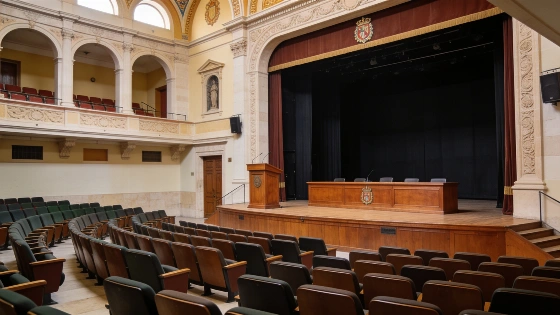
The ceremony took place on 24 September at 11:30 in the Paraninfo of UPCT’s Muralla del Mar campus, according to the university’s official announcement.
His point was simple. The difficulty may not lie only in what Vega can see. It may also lie in the environment other people have built around her. Sánchez Kaiser presented that question as a test for universities and said there is still a long way to go in responding to diversity.
That is the practical question the ceremony left behind.
Morant placed the university system within a wider crisis. She referred to solastalgia, a term coined by Australian philosopher Glenn Albrecht for the pain people feel when the place they belong to deteriorates before their eyes. She used it to discuss the effects of wildfires and what she called one of the most painful signs of the climate emergency.
The event was organised by UPCT together with the Universidad de Murcia. Reports by La Verdad and UPCT also highlighted the presence of 35 rectors, underlining the ceremony’s regional and national institutional importance.
Morant said universities must help protect the conditions for shared progress. She warned that society is losing a way of living together and an idea of improvement for everyone. At the same time, fundamental Enlightenment values are being challenged. She named freedom, equality, solidarity, tolerance, reason, knowledge and science as the principles that have driven progress.
The ceremony began shortly before midday with Canticorum Iubilo by Georg Friedrich Händel. The Unidad de Música de la Academia General del Aire y del Espacio performed the piece with the choir of the Universidad Politécnica de Cartagena.
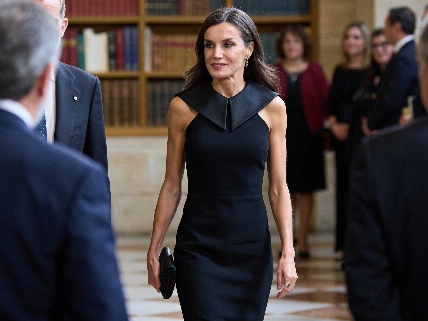
Felipe VI attended with Diana Morant. The university community was represented by rectors from the Conferencia de Rectores de las Universidades (CRUE), including its president, Julián Garde. The solemn opening is one of the main academic events of the year. It officially starts a course that will bring more than two million university students into Spain's classrooms. EFE also listed Morant's participation in the official programme for the king's visit.
Cartagena gave the ceremony a clear institutional setting, but the message went beyond protocol. Morant linked science and education to the damage caused by wildfires. Sánchez Kaiser's lecture showed what can happen when institutions are designed without enough attention to different abilities. Together, the speeches put access, knowledge and scientific responsibility at the centre of the university system's public duty. RTVE's coverage also placed the event within the new academic year and the wider public role of universities.
The ceremony came as Leonor began university life in Madrid. The Objective reported that Casa Real had announced her choice of the Universidad Carlos III de Madrid in advance. She began studying political science there in early September 2026. That timing adds a royal and educational dimension to the Cartagena event, but its main subject remained Spain's university system.
Spain's universities therefore begin the new academic year with a demanding agenda already set out from the podium. Morant's climate warning and Sánchez Kaiser's account of Vega point in the same direction. Universities cannot limit themselves to passing on knowledge while the world around them deteriorates or excludes people. The Cartagena ceremony was strongest when it turned a formal event into a demand for accountability and put inclusion and science at the centre of the institution's public duty.