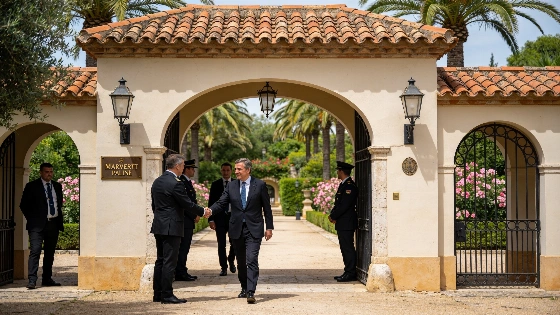
Juan José Vivas, president of the autonomous city of Ceuta, is due to meet King Felipe VI this Thursday at the Marivent Palace in Mallorca. The Royal Family is spending its summer holidays on the island, but the audience was not part of the original program. The meeting comes about a week after the mass entry from Morocco on July 30 and 31, when more than 70,000 people crossed into Ceuta by land and sea around the Tarajal area. Interior Minister Fernando Grande-Marlaska later put the figure at approximately 72,000, which he presented to Congress on August 28.
The Royal Household released a statement last Saturday, using unusually strong language to express the King’s deep concern and indignation over events in Ceuta and, to a lesser extent, Melilla. The statement said Felipe VI had been in direct contact with the presidents of both autonomous cities. He had also contacted the prime minister and the opposition leader, offering words of encouragement and resolve. The King called for clear and decisive measures to reassure residents of Ceuta and Melilla of Spain’s support and solidarity. He also stressed the state’s responsibility to guarantee security and prevent a repeat of such incidents, which have resulted in dozens of deaths. A human-rights assessment by the Global Independent Journalism Council put the toll at almost 90; a separate figure of 141 deaths was attributed to Spanish authorities by Morocco World News.
The timing of the King’s actions has drawn attention, especially as his message of congratulations to King Mohamed VI of Morocco for Throne Day was sent on July 30, the day the mass-entry crisis unfolded. The Royal Household has clarified that the congratulatory message was a standard diplomatic gesture, prepared in advance on the recommendation of the Ministry of Foreign Affairs and delivered by Spanish embassies on the relevant national holiday. The statement underlined that such messages are customary for heads of state and do not reflect a specific political stance on current events.
Felipe VI has not made an official visit to Ceuta since becoming head of state in 2014. The last royal visit to the city was in November 2007, when King Juan Carlos and Queen Sofía traveled there after more than three decades on the throne. The current situation has reignited debate over the symbolic and practical importance of royal engagement with Spain’s North African enclaves. Ceuta and Melilla are Europe’s only land borders with Africa, giving their border and migration policies wider diplomatic significance.
Meanwhile, the Spanish government has faced questions about its preparedness and response to the border crisis. As reported in recent coverage of the Interior Minister's statements, authorities insist there was no prior intelligence warning about the scale of the mass entry into Ceuta. The government continues to highlight cooperation with Morocco as a basic factor in managing migration. Prime Minister Pedro Sánchez has said Spain needs Morocco’s cooperation and that people who do not qualify for international protection must return.
The scale of the influx has also emerged in differing administrative counts. A later internal assessment by the Ceuta government cited 96,058 entries, while reporting cautioned that this was an accumulated administrative estimate, not a confirmed count of unique people, and could include duplicate records or individuals represented in more than one category. By October, Reuters reported that around 7,000 to 8,000 migrants remained dispersed across Ceuta, while other reporting cited 7,000 government-created reception places and more than 12,000 voluntary returns. Reuters also raised concerns about the speed and legal safeguards of procedures to clear the backlog, including transfers and removals where people were not given clear explanations.
Ceuta and Melilla, Spain’s two autonomous cities on the North African coast, have long been focal points for migration and border security challenges. Their proximity to Morocco makes them sensitive areas for Spanish domestic policy and international relations. The King’s intervention, though largely symbolic, signals national attention to the crisis and the need for coordinated action among Spain’s institutions as pressure on reception capacity and debate over returns continue.