Fernando Grande-Marlaska states no intelligence service warned of the mass entry in Ceuta. The government insists there was no prior report on the unprecedented scale. Spain highlights cooperation with Morocco amid the crisis.
Spain’s Interior Minister, Fernando Grande-Marlaska, has firmly rejected claims that the Centro Nacional de Inteligencia (CNI) or any other intelligence agency, Spanish or foreign, issued warnings about the mass arrival of migrants in Ceuta. According to Marlaska, the government did not receive any advance report or alert indicating that tens of thousands would attempt to swim across the El Tarajal border last Thursday. The minister’s comments came after a meeting with EU interior ministers, where he addressed the extraordinary influx that overwhelmed Spanish border forces.
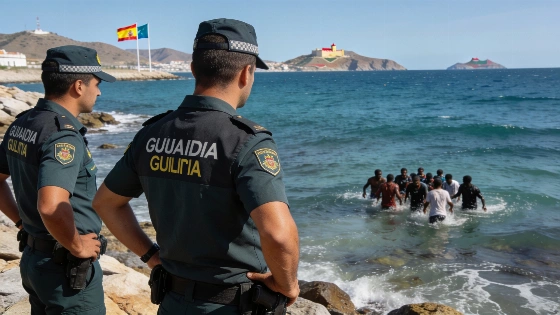
Marlaska acknowledged that intelligence services had flagged the usual seasonal uptick in maritime crossings during summer. However, he stressed that these routine alerts did not anticipate the scale or coordination seen in this incident. The minister suggested that the recent Supreme Court ruling banning 'hot returns' of migrants entering Ceuta and Melilla by sea may have contributed to the surge, but insisted that no agency foresaw such a massive event. In response, Spanish authorities reinforced the Guardia Civil presence, yet the measures proved insufficient as 72,000 migrants crossed, a figure far surpassing the 10,000 who entered during the May 2021 crisis.
Despite the unprecedented numbers, Marlaska defended the work of the CNI and other intelligence bodies, arguing that the situation was both extraordinary and unpredictable. He dismissed suggestions that the lack of early detection constituted a failure or warranted disciplinary action. The minister also emphasized the ongoing cooperation with Morocco, crediting Rabat’s support for helping to reverse the crisis. Marlaska denied any suggestion that Moroccan authorities had facilitated the crossings, instead attributing the event to the organized actions of human trafficking networks.
Of the 72,000 who entered Ceuta, Spanish officials report that 70,000 have already returned to Morocco. The government maintains that the response was as robust as possible under the circumstances, and that intelligence assessments did not predict a repeat of the 2021 scenario. The episode has reignited debate over Spain’s border management and the effectiveness of intelligence sharing, especially as the country continues to face complex migration challenges. In a related context, recent legal disputes over Spanish court decisions and EU amnesty laws have also drawn attention, as seen in the ongoing case involving Catalan leaders and the Tribunal de Cuentas, detailed in this recent report on legal appeals by former Catalan officials.
Ceuta, a Spanish enclave on the North African coast, has long been a focal point for irregular migration into the European Union. The El Tarajal border, where the latest mass crossing occurred, is heavily monitored but remains vulnerable to sudden surges. Spain’s approach to border security and migrant returns is shaped by both national court rulings and EU regulations, often requiring rapid adaptation to changing legal and humanitarian circumstances. The government’s handling of the Ceuta incident is likely to influence future policy debates on migration, intelligence coordination, and bilateral relations with Morocco.