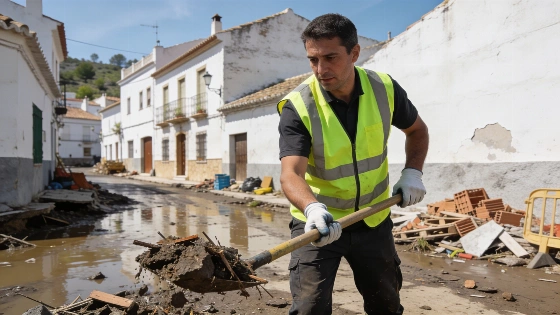
Spain’s government has unlocked a fifty million euro emergency fund to hire unemployed residents for rebuilding efforts in Andalucía and Extremadura after devastating early 2026 storms. The money will flow through local authorities, not directly to individuals, reshaping how disaster recovery jobs are filled.
Spain has set aside fifty million euros in emergency funding, but this money won’t go straight to individuals. Instead, the government will cover the salaries and social security costs for unemployed people hired by local councils in Andalucía and Extremadura, both hit hard by severe storms at the start of 2026. The Council of Ministers approved the plan on September 1, 2026, after the winter storms caused widespread damage, according to the Ministry of Finance.
For those out of work, there’s no national application or direct claim to the funds. Everything runs through municipal governments, which will decide how many jobs to offer, what roles are needed, and who gets hired. The program isn’t a blanket solution for unemployment, but a targeted effort to speed up repairs in the towns most affected by floods and extreme weather. Official statements say the money is meant for public interest projects and restoring essential infrastructure.
In Cádiz province, 36 municipalities have already been allocated a guaranteed 10.67 million euros, with the potential to increase to 12.81 million if additional funds remain.
The legal basis for the funding is Real Decreto 608/2026, which allows direct subsidies to local authorities. These grants cover wages and employer social security contributions, including unemployment insurance, professional training, and FOGASA payments. The money comes from the Servicio Público de Empleo Estatal (SEPE), using leftover treasury funds from 2025 after the regular budget fell short for this kind of crisis. This setup is meant to keep the financial strain of recovery off local budgets.
Each municipality will handle its own hiring process, set job requirements, and manage contracts. The government hasn’t said how many jobs will be created in each town, what the pay will be, or how long contracts will last. Without those details, it’s impossible to know how many people will benefit. Still, regional media in Jaén report that up to 124 unemployed people could be hired there under a 10.5 million euro allocation for storm recovery.
Anyone hoping for a direct payout will be disappointed. The scheme channels money into public works and social projects, similar to earlier SEPE-backed programs where local governments receive funds to hire for specific needs. As reported earlier, recent government interventions have focused on targeted funding rather than open-ended grants to individuals.
In Algeciras, a separate recruitment drive has been announced for 70 temporary jobs with a budget of 1.54 million euros, reflecting how the national scheme is being translated into concrete local opportunities.
Regional press
Applicants will need to watch for announcements from their local councils and employment offices to find out about available jobs and eligibility. The central government’s role stops at providing the money and legal framework; the rest is up to the municipalities, which now have to turn this funding into real jobs and visible recovery.
This approach is practical but leaves much of the process in local hands. The government avoids blanket aid, but also leaves open the question of how fairly jobs will be distributed. In the end, the success of this fifty million euro plan will depend on how quickly and transparently local administrations in Andalucía and Extremadura act. For many unemployed residents, the promise of work will only become real if their town hall follows through.