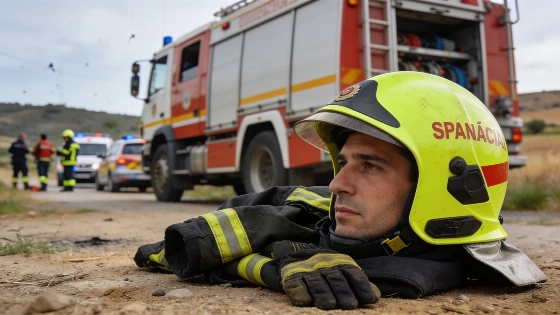
A firefighter from the Diputación Provincial de Zaragoza died on Tuesday while working to extinguish a fire in Calatorao, a town of nearly 3,000 residents in the Valdejalón region of Aragón. The death came during active firefighting operations and drew swift attention from local officials and emergency services.
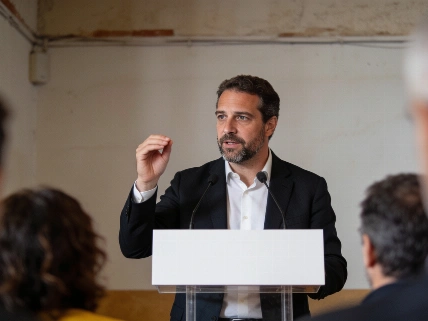
Juan Antonio Sánchez Quero, president of the provincial council, went directly to the scene after learning of the incident. Pilar Alegría, spokesperson for the socialists in the Cortes de Aragón and former Minister of Education, also expressed her condolences to the firefighter's family and colleagues, noting the constant dangers faced by those who protect the community.
The death came days after a member of the Military Emergency Unit died in an accident while fighting the Peñas de Riglos wildfire in Huesca. A technical measurement later put the area affected by that fire at 16,285.23 hectares. Las Peñas de Riglos and Bailo accounted for 12,008.93 hectares, or 73.74% of the measured area. Earlier estimates put the affected perimeter at about 18,400 hectares, while satellite analysis estimated that around 14,500 hectares had actually burned.
The incidents occurred during an exceptionally demanding wildfire season. Figures from the Ministry for the Ecological Transition and Demographic Challenge (MITECO), reported by EFE, showed 275,209 hectares of forest burned across Spain by 20 September 2026, or 2.5 times the 2016 to 2025 average. Provisional national figures for the same date recorded 8,122 wildfire incidents, including 45 large fires. Fires exceeding 500 hectares accounted for 80.5% of the burned area. These nationwide totals give context to the scale of firefighting operations but are not figures specific to Calatorao or Aragón.
A separate tally based on MITECO figures, reported by Europa Press, put the national total at approximately 280,079 hectares burned across 8,635 incidents by 4 October, including 47 large fires. Through 21 September, aerial firefighting operations logged 10,067.19 flight hours and 2,659 sorties across 498 fires, while crews made 50,259 water drops. In Aragón, a later regional account cited by Diario del Alto Aragón recorded five large forest fires and 35,675 hectares burned. Environmental official Biendicho described the campaign as extraordinarily complex and pointed to active forest management as a prevention priority.
In recent years, Spain has seen a rise in severe wildfires, particularly in rural and forested regions. Prolonged drought and high temperatures have made fires more frequent, while strong winds make them harder to control. Official data places Aragón among the regions most affected by wildfires, and local authorities are investing in additional resources and training for emergency teams. The loss of experienced personnel affects immediate response capacity and adds pressure on remaining crews.
As emergency services continue to face difficult conditions, safety protocols and support for responders remain basic concerns. The heatwave in Madrid, which led to orange alerts and increased fire risk, is a recent example of dangerous conditions reported elsewhere in Spain, as detailed in coverage of extreme weather events.