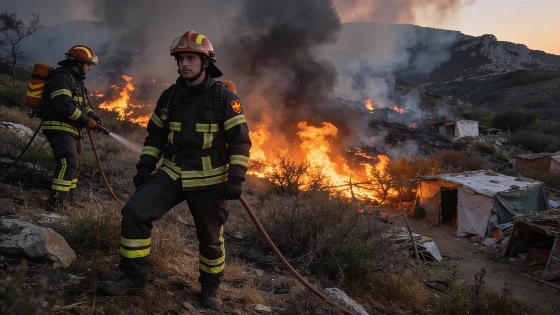
A wildfire broke out Tuesday night in Ceuta’s Monte de la Tortuga, an area now crowded with informal settlements after a recent influx of migrants. Firefighters managed to control the blaze, but the situation highlights the growing risks in the region.
Fire crews in Ceuta responded Tuesday night to a wildfire in Monte de la Tortuga, a hillside now dotted with makeshift camps after a surge of migrants arrived at the end of July. The fire started around 21:00, raising immediate concerns for both the environment and the people living in temporary shelters across García Aldave.
The Servicio de Extinción de Incendios y Salvamento was deployed quickly, but officials did not release details about the fire’s spread or possible injuries, saying it was too early in the response. Firefighters worked through the night to keep the flames from reaching more of the hillside and the crowded camps that have appeared in recent weeks.
By 22:00 on September 8, 2026, the fire in Monte de la Tortuga was officially declared controlled and extinguished, with the affected area estimated at 8–10 thousand square meters.
— The Objective
Monte de la Tortuga has become a central point in Ceuta’s ongoing struggle with irregular migration. Since late July, informal encampments have spread across the area, making both humanitarian aid and security work more complicated. The risk of fire is higher in these crowded, unregulated shelters than in empty woodland. Spanish media, citing government sources, reported that the fire’s proximity to the camps increased the danger of it spreading quickly, highlighting how vulnerable the area has become.
Officials have not yet given a full assessment of the damage, but the urgency of the response shows the growing strain on Ceuta’s emergency services. The mix of environmental risk and social tension in García Aldave is similar to what happened after recent wildfires in other parts of Spain, such as those reported earlier in Valencia, where authorities struggled to manage both disaster response and ongoing policy problems. Reuters reported that nearly five weeks after the late July influx, more than 10,000 migrants, including minors, were still living in makeshift camps or on the streets and beaches of Ceuta, putting more pressure on local resources.
The crisis in Ceuta shows how migration and public safety are now closely linked. Without regulated housing for new arrivals, once-quiet hillsides have turned into high-risk zones for both humanitarian and environmental emergencies. As the fire response winds down, the city faces a clear warning: without long-term solutions, Ceuta’s problems will only grow with each new crisis.
Estimates of the late July border crossing vary, but both Reuters and AFP reported that over 70,000 people arrived in Ceuta during July 30–31, 2026. The Spanish government later stated there was no evidence that Morocco orchestrated the surge.
— Reuters and AFP